Monday, October 27, 2025

HALLOWEEN HORROR: The Amusement Park (1973)


George A Romero's "lost" movie, 1973's The Amusement Park is a bit of an odd fish.

It was the only work-for-hire movie the father of modern zombie cinema made, commissioned by the Lutheran Service Society of Western Pennsylvania "as an educational film about elder abuse", but shelved soon after completion.

A print was discovered of this believed-to-be-lost film in 2017, restored, and was made available to view on Shudder.

Directed and edited by George A Romero, from a script by Wally Cook, The Amusement Park primarily features volunteer actors, or people who were actually involved in elderly care at the time.

In an interview, Romero's wife Suzanne Desrocher-Romero is quoted as saying:
"They [did] use it initially, but I suspect that they thought it was a little edgier than they would have liked."
Clocking in at just under an hour, the main story is bookended by stage actor Lincoln Maazel (who portrays the main character in the film) addressing the audience on how poorly the elderly generation are treated and how we should all change our attitudes to be more accommodating.

The story commences with a jovial Maazel entering an anonymous white room with a single door out.

There's another old man in there, looking the worse for wear, and groaning.

Maazel tries to engage him in conversation, but the battered man simply tells him there's nothing out there and not to go through the door.

Opening the door, Maazel - who also plays the key role of Tateh Cuda in Romero's 1978 vampire film Martin - sees a busy fun fair and steps through.

What follows is a metaphorical bombardment of this old man, with all the subtlety of a sledgehammer, as he stumbles - increasingly deliriously - through a cavalcade of on-the-nose - but often still rather clever - allegories about old age. 

For instance, pensioners are seen queueing up to hawk their valuables in exchange for tickets to the fun fair rides; there's an eye test before you're allowed to drive one of the dodgems (bumper cars) and if you hit someone police and insurance company reps show up; when Maazel tries to be kind to some children he gets heckled as a "degenerate"; a young couple visit a fortune teller and see a terrifying vision of their future in a rundown flat, penniless, and unable to get the medicine they require etc

When Maazel tries to help fellow elderly punters at the fair, the younger - more numerous - visitors don't pay him any attention.

At one point he is hustled into an attraction ominously called Boot Hill, which turns out to be a grim physiotherapy centre.

A "freak show" just features old people, and when Maazel goes to leave, the crowd proclaim that "one is escaping" and chase after him.

There's a moment when Maazel is set upon by a trio of bikers.

Another scene has him being pickpocketed by a sleazy con-artist.

Even when it seems like he might have found some solace reading The Three Little Pigs to a picnicking girl her mother soon packs up and takes the girl away, leaving Maazel almost in tears.

Finally, the ground down and broken Maazel stumbles back into the white room, now the battered version of himself as his earlier self enters the room again, fresh and full of optimism.

Stylistically, I feel The Amusement Park owes a lot to 1962's Carnival of Souls, with elements of Stanley Kubrick's 1971 A Clockwork Orange,.

You can also see echoes of The Amusement Park in LQ Jones's 1975 adaptation of Harlan Ellison's A Boy and His Dog.

It's obvious from the get-go why the film's commissioners decided not to go with this peculiar oddity as their Public Service Announcement of choice.

It falls into the same broad category as the notoriously disquieting British public information films of the same era, but is considerably longer - and more surreal - than those tended to be. 

While The Amusement Park does get across its point about the systemic mistreatment and general abandonment of the elderly, it does it in a way that is more likely to turn off a general audience rather than inspire them to take positive action. 

Not because of its more shocking and dark content, but because of its art house approach of disjointed sounds and imagery.

As an amateur cinéaste, I found The Amusement Park an interesting watch (primarily because of who directed it), but I can't say it educated or inspired me about elderly care in any manner.

Additional research c/o Wikipedia.

HALLOWEEN HORROR: Mandy (2018)


Revenge thrillers are not renowned for their complex plots and they don't come more linear than Nicolas Cage's wonderously visceral Mandy (out on DVD this week).

It's 1983 and grizzled lumberjack - and man of few words - Red Miller (Cage) and his artistic, hippy, girlfriend Mandy Bloom (Andrea Riseborough) live an idyllic life in the wilderness.

Unfortunately, by chance, one day Mandy catches the eye of failed musician and deranged cult leader Jeremiah Sand (Linus Roache).

Sand employs demented biker gang The Black Skulls to kidnap Mandy for his pleasure, but things don't go exactly according to plan, sending Red on an epic, furious, quest for vengeance.

At times feeling like a journey into Hell curated by David Lynch, Mandy is part Apocalypse Now, part Texas Chain Saw Massacre, and part Unforgiven, taking queues from multiple genres as writer/director Panos Cosmatos aims his laser-focus on Red's mythic mission of revenge.

I loves me some weird cult shit and Mandy delivers on that front with The Black Skulls and Sand's Children of the New Dawn, and enough peculiar characters and mannered dialogue to populate a suburb of Twin Peaks.

Startling visuals merge with subtle camera tricks to disorientate the viewer, enhancing our insights into the minds of both protagonist and antagonist, creating an artistic cocktail of psychedelic grindhouse.

Reminiscent of Baskin in its brutal relentlessness, Mandy, however, is more concerned with the human - and occasionally superhuman - monster than the cosmic.

The role of Red is one that only Cage could truly have embodied, segueing from effortless charm to ruthless killer as his descent into madness progresses.

With a running time just shy of two hours, Mandy feels a fraction of that duration thanks to its spectacular pacing and addictive imagery.

The plot may be a short railroad, but the scenery is breathtakingly hypnotic as you are catapulted along this stunning and unforgettable ride.

Sunday, October 26, 2025

HALLOWEEN HORROR: The Seed (2021)


Three old friends - vapid online influencer Deidre (Lucy Martin from Vikings), pet shop worker Charlotte (I Hate Suzie's Chelsea Edge), and Heather (Sophie Vavasseur, Resident Evil: Apocalypse) - head for chilled weekend at an isolated luxury villa in the Mojave desert.

The idea being they will spend the time catching-up, drinking, taking drugs and watching a "once-in-a-lifetime" meteor shower.


However, an unexpected side effect of the meteor shower is the arrival of a strange creature, dropping out the sky into the villa's swimming pool.

Thinking it's possibly an armadillo or a bear cub, Charlotte wants to care for it, but the others are less keen and just want rid of the bizarre, stinking object.

However, as the weekend unfolds, the new arrival begins to have a strange effect on first Deidre and then Heather, before Charlotte (the obvious Final Girl from the moment she appears on screen) realises what is going on.


The first feature-length work from writer-director Sam Walker, The Seed is an engrossing - if not totally original - spin on an anti-E.T.: The Extra-Terrestrial meets Color Out Of Space story.

On a superficial level, this is a 1950s shlock horror movie of the "aliens-want-our-women" sub-genre, updated for the contemporary social media generation. 

I was really expecting to find the leads annoying, but even the over-the-top Deidre is hypnotically watchable because of Lucy Martin's stellar performance.

Throw in some surreal Society-style shunting; psychedelic mental communications; and gallons of black, alien, blood and you have a great recipe for an enjoyable 90-minute Lovecraftian body horror romp.

The alien creature itself is fascinating as it is largely passive, but, as long as you can suspend your disbelief, this puppet-from-another-planet is a compelling antagonist since it relies primarily on mental powers - rather than physical - to get what it wants.

The script isn't perfect though. While Charlotte and Deidre are well-developed characters, Heather seems oddly lacking any sort of backstory beyond the fact that her father owns the villa and she's constantly worried about messing it up.

And when Charlotte and Heather are exploring the seemingly-abandoned cabin of their nearest neighbour, there's a definite suggestion that something apocalyptic has happened to the rest of the world already, and yet later we learn this is not the case.

Conversely, through the clever use of clairvoyant montages, The Seed does an excellent job of foreshadowing the alien invader's plans for the Earth without anyone spoon-feeding them to the audience.

Sam Walker also clearly loves his fake-out endings, which I always approve of if done well and these are.

HALLOWEEN HORROR: Color Out Of Space (2019)


Nathan Gardner (Nic Cage) and his wife, Theresa (Joely Richardson), have moved, with their three children, out of the big city to a secluded farm in the woods outside Arkham, Massachusetts, for a bit of peace and quiet.

Stockbroker Theresa is recovering from cancer and Nathan is trying his hand at becoming a self-sufficient farmer.

However their lives are disrupted when a strange meteorite crashes on their land, polluting the area with a paranormal alien radiation.

HP Lovecraft's original story of The Colour Out Of Space has been adapted many times, but, beyond a shadow of a doubt the latest iteration, from writer/director Richard Stanely, is the most Lovecraftian.

A gorgeous, mind-bending, blend of the cosmic with the body horror of The Thing and Society,  Color Out Of Space focuses on a trapped - and doomed - family, slowly worn down by an unknowable, extraterrestrial invader.

Certainly not for everyone, Color Out Of Space isn't a trashy teen slasher flick with obvious heroes and villains, but a terrifying encapsulation of the central theme of Lovecraft's oeuvre that "common human laws and interests and emotions have no validity or significance in the vast cosmos-at-large".

There is never really any serious suggestion that the alien entity is even aware of the humans it is transforming by its simple presence.

My Copy - Not Used In Any Rituals!
The film bears obvious similarities with 2018's Annihilation, but Color Out Of Space is the stronger work of art by a country mile.

Across the board, the central performances are superb. Nic Cage channels Nic Cage as only he can, exhibiting the convincing levels of madness and sudden rage that he does so well, while The Magicians' Madeleine Arthur is impressive as teen daughter, Lavinia, whose rebellious nature expresses itself through dabbling in witchcraft.

Beyond the gooey body horror, there's some cringe-inducing - but thankfully brief - self-mutilation that might require some eye-covering by those of us with a particular aversion to such things.

As well as rooting the story squarely in Lovecraft country, Richard Stanley has sown his tale with Lovecraftian Easter Eggs, such as the Miskatonic University sweat shirt worn by visiting surveyor Ward (Elliot Knight, sadly no relation) and the tatty, cheap paperback copy - "by Simon" - of the Necronomicon (which we all own) that Lavina consults.

Quite possibly my favourite film of 2020, Color Out Of Space is breathtaking in the audacity of its vision, a modern rendition of a Lovecraft story that truly captures the horror of its set-up and the terror of those trapped within its incidental and inescapable prison.

Saturday, October 25, 2025

HALLOWEEN HORROR: Zombeavers (2014)


A trio of spunky college girls head into the wilderness for a weekend of girltime in an isolated, lakeside cabin - but their plans are disrupted, first by the arrival of their horny boyfriends and then by an invasion of flesh-eating, zombie beavers.

Yes, Zombeavers is as daft as it sounds and it knows it. It takes its crass premise and runs with it, resulting in a near-perfect blend of teen comedy and OTT gore-horror.

Directed by Jordan Rubin from a script co-written by himself and Jon & Al Kaplan, the humour is base (come on, they're talking about beavers nearly non-stop, what did you expect?), there's some sex and skin, gruesome beaver-related injuries, a genuine sense of spam-in-a-cabin jeopardy, decent performances from the central cast, surprising twists and delightfully low-budget special effect monsters.

The killer beavers appear to be a combination of puppets and animatronics, but it doesn't matter because the levity and general joie de vivre that clearly went into making this movie carries you through.

From the deadpan humour of the opening scene to the Sinatra-esque theme over the final credits and the wonderful, post-credits, tease of a possible sequel idea (that is so obvious when you think of it I'm surprised no one hasn't already made this movie), Zombeavers just continually knocks it out the park.

Demonstrating that he knows my tastes so well, Paul got me this DVD for my birthday back in 2014 and we watched it that very day when he popped down to hand over my presents (my birthday wasn't for another week-and-a-half, but we weren't going to pass up a chance to see a film called Zombeavers) and we were both genuinely surprised by how good it was.

Originally, I think we'd both thought from the trailers that it would fall into "so bad, it's good" category, but it's actually really well-made, a helluva lotta fun and rather clever. It is genuinely one of the best all-round low-budget, horror films I'd seen that year.

One thing that struck us, in particular, was its subtle subversion of the horror movie staple of the "Final Girl" - a character you can normally pick out within the first five or ten minutes of horror movie.

Paul even said he might have to pick up a copy for himself

And please, please, please Mr Rubin, make ZomBEES as soon as soon as humanly possible - you've got a guaranteed sale here!

HALLOWEEN HORROR: Antrum - The Deadliest Film Ever Made (2018)


As I've said many times I have a particular weakness for stories about cursed media, such as Cigarette Burns, Archive 81, Deadwax, The Hills Run Red, etc but the conceit of these movies tends to be that we, at most, see and hear only glimpses of the cursed object while our protagonists track it down and, invariably, suffer the fate of all those who have pursued it in the past.

The unique gimmick of 2018's Antrum: The Deadliest Film Ever Made is that we, the audience, are seeing the entire movie for ourselves, bookended by a pair of mockumentary segments, establishing the terrifying backstory and provenance of this "unique" print of a legendary 1970s Bulgarian (?) movie called Antrum that has left a trail of death in its wake.

In a sense, we are now the protagonists in the story of this artefact, "daring" to watch it despite its existential reputation.

The central movie-within-the-movie, while occasionally horrific and tense (because we keep expecting something to happen due to the manufactured reputation attached to what we are now watching), is essentially a grim, but possibly grittily mundane, nightmarish tale about a couple of children, Oralee (Nicole Tompkins) and Nathan (Rowan Smyth), on a camping trip.

The film opens with their beloved family dog, Maxine, being put down by a vet.

Nathan is traumatised by this, especially when his mother (Kristel Elling) suggests that Maxine has gone to Hell (for reasons we discover later in the film).

So Oralee hits upon the idea of taking her younger brother out into some spooky woods (clearly inspired by Japan's infamous Aokigahara forest) to dig a tunnel down to Hell to rescue the soul of Maxine.

Oralee has it all planned out as a therapeutic exercise, but her scheme goes awry as strange things start to happen and they stumble across a farm belonging to a pair of degenerate, white trash individuals (Dan Istrate and Circus-Szalewski) who like to capture people and cook them inside a giant brass effigy of Baphomet.

Although the role of the cannibals isn't particularly protracted, I still felt this was the weakest element of the film, a peculiar random encounter with shades of Texas Chain Saw Massacre meets the grisly realism of Man Bites Dog, jumbled in with the demonic terrors (imagined or otherwise) that the siblings were also contending with.

While this story on its own is a powerful thriller, with strong horror elements, the overriding unease of the film comes from what has supposedly been done to the print of Antrum that we are watching.

The documentary portions of the larger film acknowledge that there are subliminal images and symbols cut into the movie print, but there are plenty of other details (from Midsommar-style "faces" in the background of scenes to words scratched onto the negative) left for us to discover on our own, along with occasional odd jump cuts and auditory strangeness that really gets under your skin if you let it.

A puzzle box of a picture, where you find yourself searching for clues to the bigger picture while still being invested in the story of the two siblings in the woods, Antrum: The Deadliest Film Ever Made has definite shades of The Blair Witch Project and a soupçon of additional David Lynch weirdness about it.

Actually a Canadian horror film written and directed by David Amito and Michael Laicini, Antrum deserves praise for its hardcore attempt to establish a verisimilitude around the supernatural print of this supposedly cursed movie.

If you allow yourself to buy into this, even if just for the 95 minute running time of the movie, this has the potential to stay with you for the longest time... and don't be surprised if find yourself tempted to watch it again to see if you missed anything.

Friday, October 24, 2025

HALLOWEEN HORROR: Hatchet 2 (2010)


Nothing cheers me up quicker - when I'm in the doldrums - than a good splatter flick and Hatchet 2 ;certainly delivers on that score.

Which is not to say it's a great movie; writer/director Adam Green's one-man campaign to the reclaim the old school slasher genre for the 21st Century has stuck so closely to the original formula that the sequel is, sadly, a pale imitation of the first.

Picking up where Hatchet left off, lone survivor Marybeth (the original's far more pleasing Tamara Feldman swapped out for Danielle Harris) heads back to New Orleans where she meets up with souvenir salesman and phony voodoo priest Reverend Zombie (Tony Todd) and gets him to organise a hunting party to return to the swamps and track down the murderous 'ghost' of Victor Crowley (Kane Hodder).

It takes a long while - a good half-hour - for the hunters to all get together, including Marybeth's uncle Bob (Tom Holland), who is possibly the single-most monotone and emotionally-stunted actor I have ever seen, before they all head back into the swamps the good stuff can begin.

It also doesn't help that Marybeth - as portrayed by Harris - isn't a particularly sympathetic or likeable character.

Everything feels more light-weight than last time, with almost no effort being made to sketch in backstories for the hunters before they get picked off by Crowley - although Green takes obvious delight in the drawn-out, buckets-of-blood-and-gore death scenes (several of which are quite inventive, while others are just plain nasty).

We do learn some more of Victor Crowley's tragic - and paranormal - origins and find out about Marybeth's family connections to Crowley, but after the long build-up, the slaughter of the not-so-innocent seems over too quickly.

Hatchet 2 is a decent extension of the Hatchet storyline, but after the tongue-in-bloody-cheek Grand Guignol of the original, I kind of expected more (and not just more gore) from the sequel.

At least Tony Todd is always good value for money and Kane Hodder turns in a surprisingly touching performance as Victor Crowley's father, Thomas, during an extended flashback.

I'm still keen to see Hatchet III at some stage, but not as excited as I was to see this movie after I saw the first.

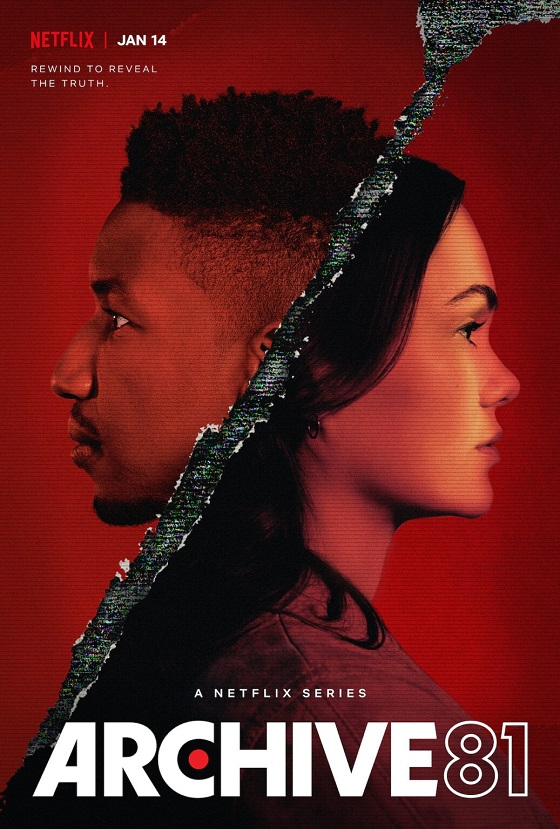
HALLOWEEN HORROR: Archive 81 (2022)


A shy video-restoration expert, Dan Turner (Underwater's Mamoudou Athie) is offered a once-in-a-lifetime financial deal to work on a sensitive project for shady businessman Virgil Davenport (Martin Donovan).

The job involves relocating to an isolated compound, where Dan will be restoring and digitising a fragile collection of fire-damaged video tapes.

He soon learns that these tapes, dating from the mid-90s, were part of a doctoral thesis by student Melody Pendras (Altered Carbon's Dina Shihabi) who was compiling an oral history of the eccentric residents of a New York apartment building.

However, as he watches the tapes, not only does Dan discover a personal connection to the unfolding story but he also sees that Melody seemingly stumbled upon a cult operating in the building.

Told over eight, hour-long episodes, Archive 81 is the latest horror offering from Netflix and I have to say upfront it's as creepy as anything.

Based on a podcast (that I was previously unaware of), for my tastes, this is as close to perfection as anything I've seen in a very long time.

I was also quite surprised - going in spoiler-free - how many coincidences there were between elements of Archive 81 and The Last Ritual, an Arkham Horror story by S.A. Sidor, which I read at the end of 2021.

Both involve cults operating in artistic communities, and, as we go deeper down the rabbit hole the backstory of Archive 81 pays a visit to a very Lovecraftian 1920s. 

The whole cult throughline has incredible Lovecraftian overtones, which made me immensely happy as the series felt like a clever modernisation of the writings of this hugely important and influential horror story scribe.

With its inclusion of another of my favourite tropes - the hunt for mysterious or cursed films - I was also reminded of the comic book mini-series, The Lot (from defunct publisher Bad Idea) and, of course, John Carpenter's Cigarette Burns, and Deadwax.

Initially I'd only planned to watch the first episode (I'd offered to check the show for 'gore content' on behalf of an old friend) of Archive 81, but I was hooked from the get-go.

I binged the whole eight-hour show in a day - with some breaks for 'real life', naturally.

Focusing primarily on Dan's investigation, and then Melody's as a story-within-the-story, some might dismiss Archive 81 as a slow-burner, but it's simply being methodical, with the viewer's close attention being rewarded with subtle clues and foreshadowing.

Some clues are there up front, like the references to Dante's Inferno, with the inclusion of an old film serial called The Circle, and our protagonist, Dan T, being led on this descent into Hell by a gentleman called Virgil.

And I'm sure there were plenty of other references and allusions that I failed to pick up on. 

By the end you will come to realise that everything was important. Other properties may boast that "it's all connected" in their rambling franchises, but in Archive 81 it really is.

If I had a small nit to pick it would be the special effects of a certain creature manifestation, but this is a very small quibble and certainly doesn't detract from the incredible, unnerving nature of the show.

Thursday, October 23, 2025

THROWBACK THURSDAY: Whatever Happened to Spontaneous Human Combustion?

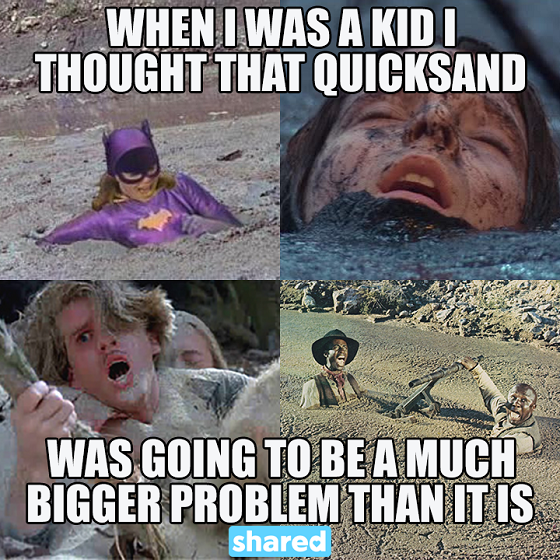
There is a meme (see above) about the disproportionate prevalence of "quicksand" as a threat in the media of our youth.

While I remember this trope - and have employed it in adventures I've written for games of Dungeons & Dragons - that's not the 'great danger' I remember most clearly from my youth that now doesn't seem to get a look-in.

That would be: spontaneous human combustion.

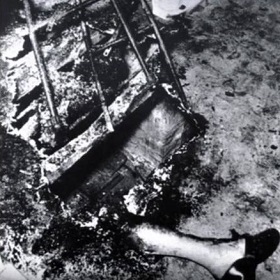
I have vivid recollections of reading about this phenomena in multiple Fortean Times-like publications (such as The Unexplained, from the early '80s) and books that I pored over as a youngling, every one seemingly running the same picture of the charred leg of a supposed victim of spontaneous human combustion.

It turns out this case dates back to 1951 and involved the discovery of Mary Reeser's limb (pictured left) in her Florida home, with signs of a very localised fire that had left the majority of the room untouched.

Although the case remains a mystery, the pseudoscience of spontaneous human combustion has been ruled out as a cause.

But when I was a wee bairn (already blighted with an easily-triggered fear of fire because of an early exposure to The Amazing Mr Blunden at the cinema), this image seared itself into my brain.

Don't get me wrong, I wasn't directly afraid of spontaneous human combustion, but for the longest time I was really convinced it was both a real thing and happening all the time around the world.

And yet since, probably, the 1990s I haven't heard mention of it.

However, in this age of idiotic conspiracy theories and science-denial, I'm expecting spontaneous human combustion to explode into our psyche once more.

My pop culture Odyssey: a slice of super-powered geek life with heavy emphasis on pulp adventure, horror, comic books, westerns, superheroes, sci-fi, giant monsters, zombies etc