Showing posts with label moorcock. Show all posts

Thursday, July 9, 2026

THROWBACK THURSDAY: The Whole World Is A Sourcebook!


As a creative, gaming-obsessed, pre-teen I sat in my corduroy shorts in prep school assembly seeking inspiration from the hymns we sang... just what was the to hit/damage bonus of a "bow of burning gold", what effect did "arrows of desire" have and just how fast was a "chariot of fire"?

In 1977, as well as discovering Star Wars, I had been introduced to Dungeons & Dragons and the whole world was suddenly "research material".

Everywhere I looked there were potential magic items or monsters for characters to contend with in dungeons drawn from every imaginable source.

My prep school co-dungeoneer, Tom, even ran me through a D&D adventure based on the first season of The Hitchhikers' Guide To The Galaxy (a radio serial he had introduced me to and also had a major impact on my life).

Television and books (particularly the sword and sorcery tales of Fritz Leiber, and a little later Harry Turtledove's first Elabon stories - Wereblood and Werenight) shaped many adventures and characters in those early years; then later comic books became a major source of inspiration as our games moved away from straight fantasy into the four-colour world of superheroes.

From these I still have three comic book standards that I would one day love to weave into a single, long-running roleplaying game: time travel, alternate dimensions, and cosmic entities.

Yet somehow, even in the games I've run for the Tuesday Knights in the past couple of decades, I have yet to squeeze all three of them in successfully; feeling that a campaign needs to progress at a steady pace for a considerable length of time before such contrasting, incredible elements can have their full, desired impact when introduced.

That said, all three feature heavily in The Sailor on The Seas of Fate, the second of Michael Moorcock's Elric books.

Even dreamier, more surreal and more psychedelic than Elric of Melniboné, this 190-page delight had me joining Elric on a ship sailing a strange ocean that linked not just islands, but worlds and planes of existence in time and space.

In a series of three adventures, Elric discovers he is but one face of The Eternal Champion, travelling to the Earth's future with three other incarnations of the Champion (Hawkmoon, Corum and Erekose) to battle two universe-threatening alien magicians; then he finds himself being chased by a Melnibonean sorcerer from history and swept up in a mythical love story; before finally taking a Heart of Darkness-style river journey to the legendary, lost birth place of his people.

These stories continue to leave me breathless, blown away by the absorbing text, the clever imagery and mental stimuli they spark in my enfeebled brain.

It also made me appreciate, perhaps, why I have never successfully tackled such cosmic themes as I desire to in my roleplaying games - they are best left to the master storytellers!

Monday, July 6, 2026

MUSICAL MONDAY: Veteran of the Psychic Wars (Blue Öyster Cult)


Massive hat tip to Dungeons & Possums, who posted this the other month and wrote:
"This is the live performance of Veteran of the Psychic Wars by Blue Öyster Cult, from the Extraterrestrial Live! tour ca 1981, recorded in Pembroke Pines, FL and released on the 1982 live album of the same name.

"It contains one of the all-time coolest extended instrumentals in rock and roll, a guitar solo journey with spot-on accompaniment that rises and rises and rises in intensity until it feels like a laser beam, a cathartic blast to break the weight of a heavy song that would have surely melted a few faces in that lucky audience
.
"

Wednesday, July 1, 2026

Deathstalker's Deeds Finally Set Down On Paper


Deathstalker - as portrayed in Steven Kostanski’s recent, excellent, movie - finally finds his way onto the written page, this September.

Bret Nelson's official adaptation of Deathstalker, published by Encyclopocalypse, will be available as a 190-page mass market paperback and and an e-book, with an audiobook following along later this year.

With a foreword by the great Patton Oswalt (who voices goblin-dwarf wizard Doodad in the film), the book - according to a recent article on Rue Morgue - will expand:
"...upon the film’s world of monsters, magic, mayhem, and adventure, bringing readers deeper into the war-torn realm of Abraxeon and the dangerous quest that places its reluctant hero at the centre of an unplanned adventure after accidentally unleashing a curse upon…himself."
Nelson, who has a solid track record with movie tie-ins, having penned adaptations of Plan 9 From Outer Space and Manborg, as well as numerous works of his own under his belt, says in the Rue Morgue piece that his was inspired by Conan The Barbarian comics and the works of Fritz Leiber and Michael Moorcock, as well as many hours of sword-and-sorcery roleplaying game campaigns.

I strongly suspect this is going to be delightfully pulpy and cannot wait to get my hands on the paperback.
"The legend returns... bloodier, bolder, and more outrageous than ever.

"Deathstalker is a thief, a mercenary, and a survivor with a talent for finding trouble wherever he roams. When a dying prince's mysterious amulet becomes bound to his soul, Deathstalker finds himself hunted by assassins, monsters, sorcerers, and creatures that should have remained buried in the darkest corners of the realm.

"Armed with an overwhelming desire to be left alone, Deathstalker embarks on a perilous quest across the war-torn kingdom of Abraxeon. Along the way he'll battle two-headed trolls, flesh-eating serpents, ancient curses, sinister magic, and an army of enemies determined to claim the amulet's deadly secret.

"Adapted from the screenplay by Steven Kostanski (Psycho Goreman, Frankie Freako) by Bret Nelson (Manborg, Plan 9 From Outer Space) and featuring a foreword by Patton Oswalt, Deathstalker is an epic journey into a world of gloriously old-school adventure.

"Sharpen your sword, and try not to get cursed along the way.

"Deathstalker rides again
."

Thursday, June 25, 2026

THROWBACK THURSDAY: Kickin' It Old School!


Supreme fantasy author Michael Moorcock admired pulp maven Robert E Howard's brutal barbarian Conan so much that when he set out to create his own swords and sorcery epic he wanted it to be as unlike the tales of the Cimmerian as possible.

And so, he created Elric: the doomed, feeble, albino sorcerer-king kept alive by, first, mysterious narcotics and later by the evil energy of his cursed sword, Stormbringer.

When I last reread the first of the Elric books - Elric of Melnibone - it took just about two days, I still couldn't put it down.

A combination of my insomnia and the power of the writing saw me reading at all hours of the day and night.

Moorcock proves you don't need a ponderous, phonebook-sized tome to tell a thrilling, memorable fantasy tale.

In a 'mere' 190-pages Elric goes from languishing on his Ruby Throne to dealing with elemental creatures, fighting off an invasion, crossing the Young Kingdoms to find his kidnapped sweetheart and finally journeying to another plane of existence to retrieve Stormbringer at the behest of the Chaos demon-god Aroich.

Outside of Tolkien's main Lord of The Rings' characters and Conan himself, Elric and his legendary sword must be two of the best known names in fantasy literature... their dreamy, nightmarish adventures seeping into all manner of related media (e.g. heavy influences on early roleplaying games from Dungeons & Dragons and Arduin to Chaosium's own Stormbringer game; to the prominent technomage in Babylon 5 universe called... Elric).

And next year, we're getting three different new Elric roleplaying games: one for Dragonbane, one for Dungeon Crawl Classics, and one for 5e!

Reading Elric of Melnibone again stirred in me nostalgic memories for the other books of my youth - Fritz Leiber's Nehwon tales with Fafhrd and the Gray Mouser or Harry Turtledove's stories of Gerin The Fox - and the old school fantasy roleplaying games of my teen years.

It filled me with a hankering for that '80s Dungeons & Dragons-style vibe, that feeling of wonder and "not knowing what's around the next corner".

To quote Wikipedia:
"Some fans of pencil and paper role playing games use [old school] to describe RPGs characterized by simple game mechanics and flexible rules. The character generation system in such RPGs tend to lack extensive lists of skills and abilities. Basic Dungeons & Dragons and the first edition of Advanced Dungeons & Dragons are often considered 'old school' role playing games."
All this hankering for past gaming glories was also been stoked back in the 2000's by several great rules-lite, war story-heavy fantasy gaming podcasts I listened to at the time. Sadly, these are now gone - swept aside by the tidal wave of "actual play" podcasts.

The pods I listened to eschewed the attitude of some of the more snobby or 'elitist' podcasts back then which looked down their virtual noses at "game stories" or the "tell me about your character" attitude.

Personally I believe that's a central element of roleplaying games - you are generating collective stories, so why not share them? Isn't this just another form of creating fantasy literature?

As long as the stories are interesting, they are as valid as any other anecdote you may care to tell.

Thursday, June 11, 2026

The Final Programme (1973)


We may still be waiting (optimistically) for a live-action Elric movie, but another aspect of Michael Moorcock's Eternal Champion found his way into the movies in The Final Programme.

Although set in the "far future" during the slow death throes of civilization, this wonderful film is cut from the same cloth as such '70s spy-fi fare as The Prisoner, The Avengers, Jason King and even Doctor Who.

Written, designed and directed by Robert Fuest (of Dr Phibes fame, but has he also directed some episodes of The Avengers back in the late '60s), The Final Programme (also known as The Last Days Of Man On Earth) is mesmerizing in its psychedelic weirdness, yet not to the extent that the story is lost to the visuals.

The story revolves around biscuit-obsessed Nobel Prize-winning physicist and playboy adventurer Jerry Cornelius (Jon Finch) who is approached by a team of scientists, fronted by the sultry and possibly not-quite-human Miss Brunner (Jenny Runacre), to retrieve some key microfilm from the vaults of his recently deceased father's mansion.

It so happens that Jerry was planning to go there anyway as he wanted to rescue his sister Catherine (an all too brief cameo by Sarah Douglas) from the clutches of his dangerous, drug-addicted brother Frank (Derrick O'Connor).

The microfilm contains the key to a scientific formula that could save mankind, by kickstarting the next stage of evolution as an hermaphroditic, self-replicating, immortal human being. Unfortunately, there is still one ingredient missing...

For my money, this film was pure Moorcock, especially the non-traditional climax which these days would have had people crying out for a sequel but in the good old days was left suitably open and provocative.

The story embraces its bonkers' excesses, but as I said above it doesn't let this wash away the central storyline of the piece as happens all too often is such outré movies.

It certainly helps that the two central performers - the amazing Jenny Runacre and the suave Jon Finch - are so charismatic, with Finch's Cornelius almost certainly being an inspiration for Austin Powers.

As well as Sarah Douglas's brief appearance, the eagle-eyed - and eared - will also spot future star (and mother of Georgia Moffett, David Tennant's wife) Sandra Dickinson in her first big screen role, as a waitress in a mud-wrestling-themed restaurant.

While Moorcock himself was not a fan of Fuest's take on the story, he praised Finch for his portrayal of Jerry Cornelius during an interview at the BFI about the movie in 2010.

Friday, June 5, 2026

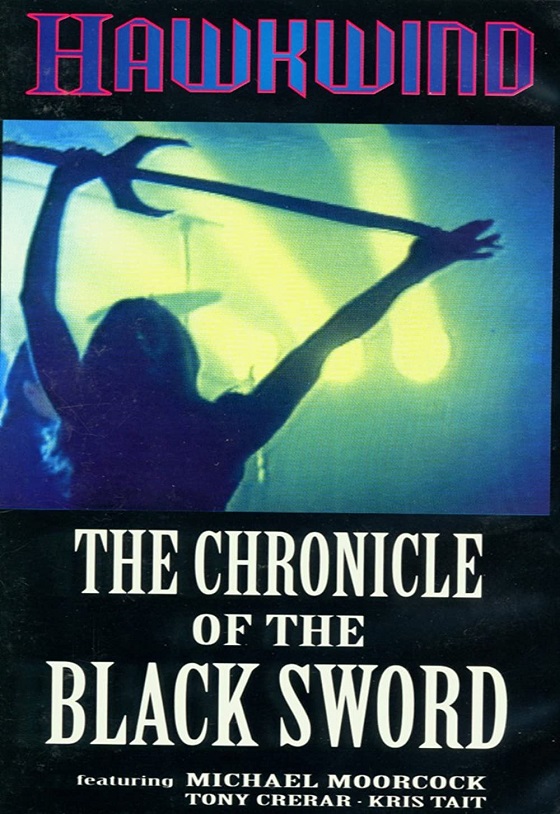
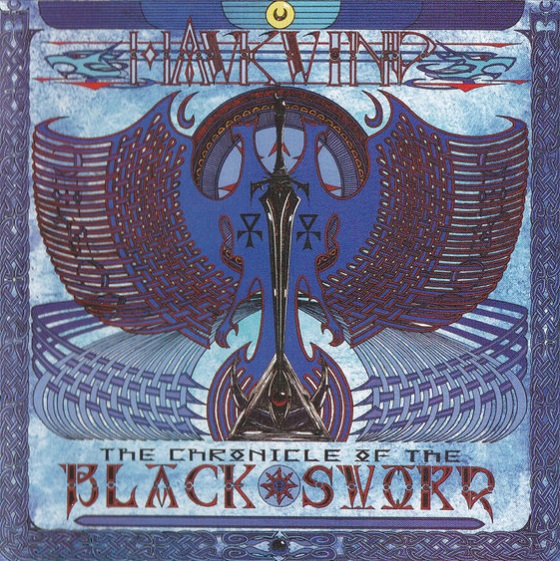
Hawkwind - The Chronicle of The Black Sword (1985)


The chance to finally see a live performance of one of my favourite albums of recent years was too good an opportunity to pass up, even if the cost of the DVD on eBay was a bit on the pricey side.

Hawkwind: The Chronicle of The Black Sword is a 75-minute live show by the legendary rock band, performing select tracks from their 1985 album of the same name, a musical adaptation of the early adventures of Michael Moorcock's cursed, albino, swords-and-sorcery anti-hero, Elric of Melniboné.

Not only does Elric himself appear in the show, in the form of actor Tony Crerar, complete with Kabuki-style face paint and wielding a mighty Stormbringer prop, but Michael Moorcock pops up as well, providing lyrical 'spoken word' narration to some of the stories being presented.

He returns for the encore, adding guest vocals to the medley of Hawkwind tracks.

Hawkwind: The Chronicle of The Black Sword isn't a full-on rock opera though, more a series of psychedelic vignettes, often centred around primitive and dated lighting effects, clearly designed not so much to be "watched" as "experienced", quite possibly with the aid of non-prescription drugs. 

Filmed at London's Hammersmith Odeon in 1985, and released (presumably initially on VHS) the following year, both the sound and the image quality are not up to the levels we are used to these days, and I couldn't help feeling that this concert recording could benefit from a 21st Century Blu-Ray or 4K upgrade.

I think I only consciously discovered Hawkwind, and particularly this Elric-inspired album, in the last decade or so.

I have to confess that this live performance will never replace the majesty of the original album, but it was certainly captures a moment, and gives us a unique Moorcock-endorsed look at a hallucinogenic interpretation of the world of Elric.


For comparison, the album tracks, on the version I own, are:
  • Song of the Swords
  • Shade Gate
  • The Sea King
  • The Pulsing Cavern
  • Elric the Enchanter
  • Needle Gun
  • Zarozinia
  • The Demise
  • Sleep of a Thousand Tears
  • Chaos Army
  • Horn of Destiny
  • Arioch
  • Night of The Hawks
  • Green Finned Demon
  • Dream Dancers
  • Dragons and Fables
Whereas the songs performed in the live set are:
  • Song of The Swords
  • Sea King
  • Master of The Universe
  • Choose Your Masques
  • Needlegun
  • Zarozinia
  • Lords of Chaos
  • Brainstorm
  • Moonglum
  • Elric The Enchanter
  • Magnu
  • Horn of Destiny
Now, come on Hollywood, where's our Elric of Melniboné movie?

You already have the perfect lead in Tilda Swinton...

Thursday, May 28, 2026

The Importance of Michael Moorcock to RPG History


In preparation for the release of its Classic Era of Elric roleplaying game (compatible with Dungeon Crawl Classics and Dungeons & Dragons 5e), Goodman Games has published a nice overview of Michael Moorcock's importance in the world of sword and sorcery fiction, as well as his influence on the fantasy roleplaying game oeuvre.

You can read the article about Elric's creator here.

Goodman Games' The Classic Era of Elric roleplaying game (yeah, I can't get my head round that name yet. I'm wondering if it's just a placeholder) will be the subject of a crowdfunding campaign on BackerKit next year and you can sign up to be alerted when that launches here.

Moorcock is the youngest and only living author mentioned in Gary Gygax's famous Appendix N list of inspirational authors for Dungeons & Dragons players and gamesmasters, from the 1979 Advanced Dungeons & Dragons Dungeon Master's Guide.

Below you will find a 2019 interview with Michael Moorcock from the Appendix N Book Club podcast, in which the forthright author shares his views on gaming companies using his creations, racism in the works of Lovecraft and Agatha Christie, why he prefers the adventures of Conan to Lord Of The Rings, the birth and evolution of Elric (not an elf!), the benefits of comic book adaptations, writing Hawkmoon books in three days, The Multiverse and destroying universes, Dan Dare's optimistic future, activism, feminism, Brexit... and a plug for his most recent music album!

You can download the podcast episode here via iTunes or listen to it here:


Wednesday, May 13, 2026

More Blood and Souls For My Lord Arioch!


Michael Moorcock's Elric may not have been my (post-Tolkien) introduction to the sword-and-sorcery genre (that honour rests with Fritz Leiber's Fafhrd and The Gray Mouser), it was Moorcock's work that truly shaped my taste in reading.

I haven't read any Leiber in an age, but I often revisit the twisted, hallucinogenic, weird fantasy adventures of Elric of Melniboné and The Young Kingdoms.

There's something about the succinctness of Moorcock's early tales of Elric and his soul-devouring sword Stormbringer that I've always found more enchanting than the doorstop tomes so prevalent today.

It was after years of reading Moorcock that I instituted my "Moorcock Rule" (more of a guideline)  that stated that a book REALLY had to work hard to justify itself if it ran longer than 150-200 pages. 

That said, I've never used the Young Kingdoms - nor any of the trappings of Elric's adventures (even Stormbringer, itself) - in my own roleplaying games. 

I don't own a copy of Chaosium's Stormbringer/Elric of Melniboné RPGs (1981 - 2010). I've looked into it in the last couple of decades but those books generally command silly money on the secondary market.

However, in recent weeks, both Goodman Games and Free League have announced they will be releasing games based on this IP next year (after crowdfunding campaigns).

Goodman Games is planning two different iterations: one using Dungeons & Dragons 5e and one using Dungeon Crawl Classics. While I feel the latter system is probably more suited to emulating the demon-fuelled magic of Elric's world, neither of these systems really tickle my fancy at the moment.

However, my interest is well-and-truly piqued by Free League's offering, Legends of Stormbringer, which will run on the Dragonbane engine. 

I know I keep saying I'm out of the buying new games side of the hobby, but to quote Michael Corleone in The Godfather, Part III:
"Just when I thought I was out, they pull me back in."
Dragonbane isn't a game I'm particularly familiar with, except from second hand accounts which are a generally overwhelmingly positive... with a few minor niggles about some of the mechanics.

A translated version of Drakar och Demoner, a game system played in Scandinavia since 1982, Dragonbane's definitely been at the top of my "must check out the starter set" list since it was first released in English in 2023.

This recent announcement might be the nudge I "needed" to pull the trigger on yet another game that I may - or may not - run for the Tuesday Knights.

You can read about Free League's forthcoming Stormbringer offering (and a bit about Dragonbane) here.

Wednesday, March 25, 2026

She Is Conann (2023)


Presented as a series of vignettes, 2023's She is Conann, written and directed by Bertrand Mandico, is supposedly a feminist take on Conan The Barbarian

I would beg to differ. The various segments of this French art house offering present Conann (Con-ann, gettit?) at different stages of her life (which, as far as I could tell, was the main similarity to Robert E Howard's stories of Conan The Barbarian), starting as a peasant girl captured by barbarians led by the red-haired Sanja (also called Sonja), played by Julia Riedler.

Both Sanja and Conann turn out to be immortal - for no readily explained reason - but whereas Sanja is played by the same actress throughout her various appearances, Conann is portrayed by a succession of different actresses: Claire Duburcq at age 15, Christa Théret at age 25, Sandra Parfait at age 35, Agata Buzek at age 45, and Nathalie Richard at age 55.

Nearly always in her orbit is the dog-man Rainer (Elina Löwensohn), a cameraman documenting her life and narrating the movie. All very gender-fluid and meta, but ultimately sound and fury signifying nothing. 

Rainer (Elina Löwensohn)
Why is Rainer a dog-person? Who knows! However, I must admit that the make-up on Löwensohn (and the other dog-people who pop up) is very impressive. My mind couldn't help wandering to the dog-people of Jeff Noon's excellent Vurt books, and wondering why these had never been adapted to the big screen.

Perhaps She is Conann is meant to be a commentary on the broader machismo and sleaze of many of barbarian movies of the 1980s? However, to my mind, any film that requires a crib sheet to fully grok is a huge red flag.

She is Conann begins in a sci-fi/fantasy world (supposedly Sumeria, but you'd never know), with strong '80s-throwback, retro vibes (accentuated by the fact that the entire film is shot on a series of soundstages with old school, direct-to-video, levels of set decoration).

The story soon jumps to a more contemporary period and all semblance of a sword-and-sorcery setting is forgotten (bar the odd reference to "barbarism").

Every segment ends - segueing into the next - with the Conann of that period being slain by her next 'incarnation', until the final story when she has become a multimillionaire patron of arts and gives herself up to the artists she supports as an edible work of art.

The creators can only inherit Conann's limitless wealth if they totally consume her specially-prepared body.

The deliciously disturbing body horror sequence that follows is really the highlight of She is Conann

This being the most overt, and clear, segment of the movie, I'm pretty sure there was a clever metaphor about 'eating the rich' in there should you be inspired to look for it.

Shot primarily in black and white, but switching to colour every now and again, She is Conann is also largely in French (with subtitles) except for a segment set in '80s New York when the characters speak - and swear - in English.

Ultimately, the 105-minute movie is a stylish, but empty, mélange of assorted styles and ideas from far superior sources, the unique cinematic voices of Peter Greenaway and Derek Jarman mixed with literary tropes from Michael Moorcock and William S Burroughs.

Oddly though, as infuriatingly incomprehensible as much of it is, the story flows and moves quickly, probably helped along by the comparatively short length of time spent on each period of Conann's life.

But that also means each iteration never hangs around long enough for us to truly understand her character at the moment in her life or her motivations.

Presumably every directorial and narrative choice in the film has been made for a reason, it's just unclear what those reasons were.

On paper Bertrand Mandico's recipe for reimagining Conan The Barbarian should have created a perfect meal for this viewer, who usually has a lot of time for clever art films, but instead She is Conann is disappointingly too pretentious for its own good.

Thursday, March 19, 2026

Paintings and Ice Schooners Lead Me Down A Rabbit Hole

Beautifully packaged parcel from Peahen In The Tree
When I started putting my thoughts together about returning to the world of blogging a year or so ago, I never imagined I'd be writing so much about my book collection.

But then I discovered Booktube, and my perspective shifted somewhat.

The other day, a random eBay advert hit my eyeballs for different edition of a key book from my formative years as a young gamer: Wereblood (or, in this iteration, Were Blood) by Erik Iverson (aka alt-history maven Harry Turtledove).

My 'new' copy of Wereblood
But what made this printing of particular interest to me was the painted Boris Vallejo cover (see above), which bore no relevance to the Gerin The Fox story told in Wereblood whatsoever.

In fact I knew it from a 1985 roleplaying supplement from Mayfair Games' Role Aids line that I was mildly obsessed with as a youth. Ice Elves did exactly what it said on the tin (and in Vallejo's 1978 painting).

It was an Advanced Dungeons & Dragons adventure and rules supplement that explored the idea of a race of elves living in the frozen North, getting around on ultracool "ice riggers".

The reason I was rather hooked on this supplement is because of the similarities, especially in the whole "ships that glide over ice" aspect, to the first Michael Moorcook book I ever read: The Ice Schooner.


However, the more I thought about this - especially when my parcel from online book trader Peahen In The Tree arrived - the more surprised I was by the fact that Vallejo's art didn't decorate the covers of the either of the two editions I have of The Ice Schooner.

My two copies of The Ice Schooner
But a wee bit of Googling quickly revealed it had, of course, been used as a cover illustration for a 1978 Dell Publishing edition of The Ice Schooner:

Was this painting originally commissioned for this book?
A key aspect of the book that introduced me to the wonderful writing of Michael Moorcock is that it was another purchase from P&P Book Exchange in Goods Station Road, Tunbridge Wells.

This is the same - sadly, long-gone - second hand book store where, four decades ago, I discovered the cosmic horror of HP Lovecraft for the first time and was transformed from a "dabbler" in comics to full-on collector when I purchased piles of Wolfman/Perez New Teen Titans and John Byrne Fantastic Four comics.

It's no understatement to say that one store played a major role in shaping my lifelong geeky interests. 

The world needs more browsable, brick-and-mortar, second hand book shops.

Thursday, October 9, 2025

THROWBACK THURSDAY: Whence Lovecraft?

Mythos Tomes: My earliest forays into the works of HP Lovecraft

I've been reading HP Lovecraft since I was a teenager. I recall writing about him in my English Literature A Level exam, which given I was supposed to be critiquing Dickens' Great Expectations probably explains my poor grade.

My memory of how I actually came upon the works of Lovecraft is rather hazy, but I'm sure I was already aware - and a fan - of his oeuvre before I invested in my first edition box set of Chaosium's seminal Call Of Cthulhu game.

This was published in 1981, with the second edition coming out in 1983, which suggests I picked up the game sometime between those dates.

I suspect my introduction to Lovecraft could well have been TSR's Deities & Demigods (the Advanced Dungeons & Dragons supplement, published in 1980, that - only for its first edition - included the Cthulhu Mythos as well as Michael Moorcock's Elric mythology, as well as various pantheons or gods and heroes from ancient religions around our world).

This almost certainly led me to invest in the paperbacks you see above, several of which are stamped as coming from the P&P Book Exchange in Goods Station Road, Tunbridge Wells (which is where I also came across my first collection of Wolfman/Perez era New Teen Titans comics that got me hooked on the medium and turned me into a 'proper' comic book collector).

Those paperbacks have seen better days. particularly The Haunter In The Dark And Other Tales Of Terror (a 1963 edition from Panther Books, priced at three shillings and six pence!) which is falling apart because it was read so much.

Thursday, August 28, 2025

THROWBACK THURSDAY: Conan Digests


When we were readying ourselves to move house half-a-dozen years ago, I was shifting boxes in the 'office' part of my attic-gamesroom and 'discovered' a long concealed bookcase; squirrelled away in the corner, on which was my collection of eight, old Conan The Barbarian digests.

These were pocket-sized, British reprints (in black and white) from the early '80s, of Conan's original stint in the pages of Marvel Comics, each around 50-pages long.

These were my first exposure to both Conan The Barbarian and the works of Robert E Howard, I would have been about 14 or 15 when I picked these up.


I guess I was a comparative latecomer to the exploits of the mighty Cimmerian, having cut my sword-and-sorcery teeth - soon after being introduced to Dungeons & Dragons at the tail-end of the '70s - on Fritz Leiber's Nehwon tales with Fafhrd and the Gray Mouser, Harry Turtledove's stories of Gerin The Fox, and then Michael Moorcock's Elric of Melniboné, years before I encountered Conan The Barbarian.

In truth, I think, after the comic book digests, my first actual Robert E Howard book was a remaindered copy of The Gods Of Bal-Sagoth, an Ace Science-Fiction collection of non-Conan stories, that I purchased in a discount book store while out shopping with my parents.

Like pretty much everything at that time, my early interest in Howard's work - and Conan - was fuelled by my desire to make everything about my blossoming passion for roleplaying games, and particularly Dungeons & Dragons.

A passion they still serve today.

Monday, August 25, 2025

Psycho Goreman (2020)

 A nameless, near-omnipotent force of evil is finally overthrown by the "forces of light" (aka The Planetary Alliance) and imprisoned on an out of the way world... which just happens to be Earth.

Playing in their suburban garden one night, two young siblings - borderline sociopath Mimi (Nita-Josee Hanna) and her put-upon brother Luke (Owen Myre) - unearth a glowing gemstone.

The next day they discover 'something' has dug its way out of their garden, and they track the creature to a nearby abandoned factory, where it's hiding out.

The creature (played by Matthew Ninaber, with Stevn Vlahos providing the voice) is the "nameless evil", but the kids soon realise that it must obey Mimi's every command, because she holds the gem.

It reveals that its enemies refer to it as the Arch-Duke of Nightmares, but the kids decide to call it Psycho Goreman ('PG' for short) instead.

While the youngsters are having fun with their new 'toy' (for instance, one of their friends gets turned into a brain creature and a cop into a soulless, half-melted zombie... you know, crazy kid stuff), the forces that imprisoned PG on Earth become aware of his escape from captivity.

The Planetary Alliance sends Pandora The Templar (Kristen MacCulloch) to recapture the monster while he is still in a weakened state.

As this is all unfolding Psycho Goreman lives up to his nickname and enters Luke's dreamscape, trying to convince him to steal the gem from Mimi, but Luke sticks by his sister.

Until, she playfully orders PG to kill him one day!

You see, Mimi has become a living example of the old adage about "power corrupting", and while she started off with a mean streak, having PG at her beck and call has just made her worse.

Will the arrival of Pandora on Earth resolve the situation?

Written and directed by Steven Kostanski (who also made the brilliantly Lovecraftian horror The Void and the forthcoming Deathstalker reboot), PG: Psycho Goreman is truly bonkers, a gonzo, blood-spattered spin on the look of Power Rangers, interwoven with Japanese body horror, retro special effects, layered world-building, and a wicked sense of humour.

Even under Mimi's control, the invulnerable and superstrong Psycho Goreman has access to a broad arsenal of "dark magics" (such as transformation magic, telekinesis, paralysis etc) that ultimately means he is able to dole out whatever punishment he feels a target deserves.

Of course, if you fight honourably, you may well merit a "warrior's death"... which involves PG cannibalising your corpse in a most shocking manner.

With its tongue buried firmly in its cheek, PG: Psycho Goreman is most definitely not a film to be taken seriously, instead it feels as though Kostanki has thrown everything he loved from his childhood into a blender and splurged the results out onto the page.

Very much a comic book supervillain, there are shades of Thanos (and Darkseid) in Goreman's backstory, which makes his dominance by a young girl all the more humorous and rewarding.

He even has his own Paladins of Obsidian, a collective of unique villainous creatures, that he believes will come and save him.

The power dynamics of the PG universe are highly reminiscent of that employed by Michael Moorcock, with Psycho Goreman as the ultimate representation of chaos and Pandora as the definitive bastion of law.

Although the terms "good" and "evil" are bandied about, as is said at one point, the central battle is truly "evil versus an even worse evil".

Another geeky reference I grokked was the name of PG's homeworld, Gigax. Surely (even with the variant spelling) this is a reference to Gary?

And the anarchic and incomprehensible homemade game of 'Crazy Ball' that Mimi and Luke play all the time - and was always going to be a key element in the narrative - strongly reminded me of 'Calvinball'  from Calvin and Hobbes.

Coming in at just over an hour-and-half, PG: Psycho Goreman is like a well-made Troma Entertainment movie, a Full Moon Features film with a decent budget, or an unfettered student flick with a top-notch script.

Not so much subverting expectations as leaning into them, PG: Psycho Goreman is simultaneously reminiscent of so much trash cinema we've grown up loving, and yet wonderfully unique in its commitment to a solid story in a well-defined sci-fi universe.

My pop culture Odyssey: a slice of super-powered geek life with heavy emphasis on pulp adventure, superheroes, comic books, westerns, horror, sci-fi, giant monsters, zombies etc