"Watch the skies, everywhere! Keep looking. Keep watching the skies!"
- Ned "Scotty" Scott
US Airforce Captain Patrick "Pat" Hendry (Kenneth Tobey), his crew, and annoying newsman Ned "Scotty" Scott (Douglas Spencer) fly from Anchorage, Alaska, to a scientific research station near the North Pole, to investigate reports of a crashed aircraft.
However, they soon discover that it's actually a UFO.
Unfortunately, their attempts to remove the alien space craft from the ice results in its destruction, but they do recover the frozen body of one of its crew (James Arness), which they transport back to base.
Finding themselves cut off from civilisation due to the weather and radio interference, Pat decrees that no investigation of the alien creature can begin without the say-so of headquarters.
This frustrates gung-ho head scientist Dr. Arthur Carrington (Robert Cornthwaite), whose assistant, Nikki Nicholson (Margaret Sheridan), happens to be involved in an on-again, off-again, tempestuous relationship with Pat (which does involve bondage!).
The creature is accidentally awakened and goes on a rampage, letting the scientists at the isolated arctic base discover that it is a vegetable-based species, immune to most forms of damage.
Once the alien starts killing, secretly Carrington - and some of the scientists - also realise that the monster is after blood to feed its seedlings with, to (presumably) grow a race of killer vegetable creatures to take over the planet.
Howard Hawks's The Thing from Another World is pure action-horror pulp, pitting square-jawed heroes against an unstoppable alien menace that wants to crush their way of life and reduce mankind to the status of plant food.
Obviously, this movie was the inspiration - along with John W. Campbell Junior's story Who Goes There? - for John Carpenter's seminal The Thing, in 1982.
However, it also clearly had an influence on both Alien and Aliens, with the Air Force top brass taking a stance very similar to Weyland-Yutani when it comes to dealing with dangerous alien life forms, and the men at the base using Geiger counters in a way that presages the motion detectors famously used to track xenomorphs.
Obviously, the creature here is a very simple cinematic alien species, compared to the Lovecraftian horrors unleashed in The Thing and Alien, but nevertheless The Thing From Another World still conjures images of an alien society where humans (or their ilk) are farmed by these monstrous creatures.
Lumbering around like Frankenstein's Monster, "The Thing" is clearly a metaphor for the perceived Cold War era 'Red Menace' of Russia, lashing out at the one person that tries to reason with it - while our plucky heroes know it's a "wrong 'un" from the get-go.
Sure, it's tame compared to the movies it inspired, but The Thing From Another World remains an action-packed, sci-fi, monster flick.
We open on Mary Shelley (Elsa Lanchester), the true creator of Frankenstein's Monster, revealing to Percy Shelley (Douglas Walton) and Lord Byron (Gavin Gordon) that Henry Frankenstein (Colin Clive) and the Monster (Boris Karloff, credited simply as Karloff) did not die at the end of the original, 1931, movie.
While the Monster roams the forests, Frankenstein is convalescing back at his family estate, when his old professor, the wonderfully batty Dr. Septimus Pretorius (Ernest Thesiger) shows up, seeking a collaboration with his former pupil.
Pretorius has been doing his own experiments, growing tiny homunculi, but now he wants to create his own full-sized, fully functioning person - a mate for Frankenstein's creation.
Doctor Septimus Pretorius and his tiny creations
Frankenstein isn't sure that's the way to go, and really wants to get out of the monster-making business and settle down with his new wife.
The creature is captured, but quickly escapes back into the woods, where it befriends a blind musician (O.P. Heggie), who takes the Monster in, feeds it, and teaches it the rudiments of speech.
However, this brief idyll is soon interrupted by hunters, who recognise the Monster and start up a hue-and-cry.
Running away, the creature comes upon Pretorius and his grave-robbing goons, as they are sourcing parts for their planned project.
Pretorius persuades the Monster to kidnap Frankenstein's bride (Valerie Hobson), to strong-arm the reluctant scientist into returning to his castle and continuing his experiment to create life.
Things don't work out quite as planned.
It's easy to forget that the titular Bride Of Frankenstein only actually appears in the final five minutes of this glorious Universal horror film.
I love pretty much everything about this near-perfect monster movie, from the eccentricities of Pretorius to the final shocking twist of fate when the Bride sets her eyes on her intended.
To me, it's just a splendid-looking, sharply-written, well-acted, monster movie told in a mere 74 minutes; an object lesson to those who feel the need to unnecessarily pad films out to two-and-a-half or even three hours.
We haven't seen a decent appearance by DC Comics' Western antihero Jonah Hex for a good, long while, but the scarred bounty hunter returns this October in a new six-part miniseries, Jonah Hex and the Shadow of Death.
Written and illustrated by Michael Walsh - known for The Silver Coin, Universal Monsters: Frankenstein, and Exquisite Corpses - this latest slice of Weird West horror for Hex begins with our protagonist seemingly retired and living in the small town of Ashecott.
Of course, it's not long before an ancient evil rises and Hex is forced to put his guns back on. Could this be his chance for redemption?
This title is one of the latest additions to DC's Next Level publishing initiative, which begins in September, bringing more classic characters and teams back into their current continuity:
Below are a couple of dialogue-free sample pages from Jonah Hex and the Shadow of Death:
The 1970 Hammer film, The Horror of Frankenstein is coming to Talking Pictures TV in the UK on Sunday, July 19, at 9.25pm, with a repeat showing on August 6 at 9.20pm.
Brilliant but arrogant scientist Victor Frankenstein (Ralph Bates) builds a man from spare body parts, only for the monster to come alive and wreak havoc.
Horror movie icon Peter Cushing stars in 1974's Frankenstein and The Monster from Hell, which airs in the UK on Talking Pictures TV on Thursday, June 18, at 9.20pm.
I have three movies I call my "comfort films" that I will try and watch whenever I see them listed on the TV schedules or can turn to (via blu-rays, dvd, or streaming) whenever I'm feeling a bit down and need an escape hatch.
These are Raiders of The Lost Ark, George Pal's The Time Machine, and Quatermass and The Pit.
To me, these are perfect, review-proof works of genius that I can never tire of watching, all with deeper meanings and impacts on my life than what is shown on screen.
Today, we're thinking about the "adventures" of Professor Bernard Quatermass.
My first exposure to the world of Quatermass was the apocalyptic 1979 sci-fi thriller series known simply as Quatermass.
This bleak, four-part miniseries had a major impact on its 13-year-old viewer when first screened; implanting in me a fascination not just for adventure stories set amongst urban decay but the heroic futility of standing up to alien creatures of unimaginable power and destructive capabilities.
I am sure there is some synchronicity between my first viewing of this televisual tale and my discovery - not long afterwards - and immediate love for, the works of HP Lovecraft.
From Cthulhu to Galactus, all these cosmic entities can trace their influence on me back to watching Quatermass on ITV in the late 70s.
So inspired by this series was I that I also clearly remember creating (but never playing) a Quatermass role-playing game system and, once we started playing the comic book RPG Villains & Vigilantes, I named an alien race after the "enemy" in Quatermass - The Harvesters... although they were nowhere near as powerful as that entity!
Set at the end of the 20th Century (the future when this was made),Quatermass sees the return to London of Bernard Quatermass (Sir John Mills), founder of the British Rocket Group which pioneered space travel in the UK (see The Quatermass Experimentof 1953 and its cinematic remake).
He's been living in seclusion in Scotland and is unaware of the anarchy spreading through England, with gangs roaming the streets, power cuts and the general collapse of society. He is looking for his runaway granddaughter and instead meets up with a fellow scientist (Simon MacCorkindale).
Also roaming the land are a group known as The Planet People - hippies who gather at stone circles, prophesying a mass transmigration of those who "believe" to a Utopian alien planet.
Then the beams of light start coming from the sky, hitting the places where people have gathered and seemingly disintegrating them; although the Planet People believe they have been "taken to The Planet".
Seen now Quatermass can seem slightly melodramatic in places, but it can still deliver an incredible impact with its portrayal of a very British Apocalypse, complete with polite graffiti, a plate of sandwiches and a thermos of tea.
It faces themes of science versus belief, youthful enthusiasm versus the experience of age and the human spirit's unwavering strength in the face of overwhelming odds.
If HP Lovecraft were alive in the 1970s, this is exactly what he would have been writing - man as an insignificant speck in the Universe, caught up in events way beyond his understanding and ability to comprehend.
Don't expect answers, explanations or convenient happy endings - there is no Deus Ex Machina in the world of Bernard Quatermass... it is that God In The Machine that is "harvesting" the human race!
Originally created by writer Nigel Kneale (who also penned The Stone Tape) in the paranoia-fuelled 1950s, Quatermass - an intellectual professor defending the Earth from extraterrestrial threats through the use of brains rather than brawn - is an obvious precursor of The Doctor (who shares many of the same traits and convictions, despite being an alien himself).
Kneale wrote three original Quatermass serials for television: The Quatermass Experiment (an astronaut returning to Earth unknowingly carrying an alien creature which is continually mutating); Quartermass II (aliens take over a research plant on the South Coast); and Quatermass And The Pit (workmen in London unearth an old, crashed spaceship and release 'psychic ghosts').
I discovered all three of these stories through Arrow's script books, published in the late '70s, almost certainly released to cash in on Quatermass.
Later would come the radio series The Quatermass Memoirs, first broadcast as part of a season about 'The Fifties' on Radio 3 in 1996, and while some of the old news clips are a bit scratchy, the whole drama-documentary is an informative, inspirational and terrifying reflection of a time when the world was gripped by fear of nuclear holocaust.
It is a five-part documentary about the origins of the character, intercut with genuine 1950s news broadcasts, exerpts from the original serials, recollections and anecdotes from Nigel Kneale and an original mini-play by Kneale, set in the 1970s, wherein Bernard Quatermass, having retired to the wilds of Scotland (as mentioned at the start of Quatermass), discusses his life with a young journalist.
Long before Space:1999, UFO, Thunderbirds and even Doctor Who, there was ... Quatermass.
Throughout most of the 1950s, Quatermass was a British science fiction institution which appeared both on TV and in the cinema. Yet perhaps more importantly, it was the first adult based, dramatic science fiction television show in the world.
Now, over 70 years later, Quatermass not only lives on through its devoted fan base, but is a name which continues to resonate with science fiction fans both young and old.
In this special retrospective study, we look back upon the history of this highly celebrated franchise, whilst not only addressing the positive aspects the series brought to the science fiction genre but also the many challenges it faced in doing so.
I'll admit upfront that I have a soft spot for the work of late B-movie director Albert Pyun. Having had a couple of interactions with him in my previous blogging life, he came across as a lovely, genuine person.
Following on from my reviews of the last couple of days, it thus felt like time to revisit Albert's 1990 extravaganza: Captain America, featuring Matt Salinger - son of author JD Salinger - in the titular role.
Despite what you may have heard over the years, this adaptation of one of Marvel Comic's core characters isn't actually too bad. Salinger does a pretty decent job as Steve Rogers and Captain America, the costume doesn't look too silly and the production values give it the feel of Lynda Carter's Wonder Woman.
There are some odd changes to Cap's established mythology, with the most bizarre being the transformation of his legendary Nazi nemesis The Red Skull (Scott Paulin) from a German to an Italian (hand-picked as a youth by Mussolini to take part in the Nazi 'super soldier' programme).
The scientist in charge of the experiment, Dr Maria Vaselli (Carla Cassola), clearly hadn't been reading the memos and is horrified to discover that the first test subject is a young boy and so flees the country.
Seven years later, at the height of the Second World War, Vaselli is working for the American Government on its own super-soldier programme with polio victim Steve Rogers selected as the first candidate.
There's flashing lights and sparking machinery - clearly borrowed from Dr Frankenstein - before a Nazi agent kills the professor.
This is quite familiar territory for Cap fans, with him soon finding himself strapped to a Nazi superbomb heading towards the White House (which he manages to redirect at the last moment, of course) that, instead, crash lands in Alaska.
He is discovered 50 years later and refuses, at first, to believe it's now the '90s - until he meets up again with his hometown sweetheart, Bernice, and - after her death - attaches himself to her daughter, Sharon (Kim Gillingham plays both mother and daughter), who he then proceeds to drag into all kinds of danger.
The President of The United States (Ronny Cox) is kidnapped by a cartel of evil industrialists - led by The Red Skull - who opposes his pro-Green stance (they intend to stick a mind-controlling implant in him!) and Cap heads off to Italy to rescue the President from The Red Skull's castle.
There are some nice touches: such as President Kimball having been a little kid who saw Cap save The White House and was inspired by him, and the fact that The Red Skull (whose accent swings from Mafia Don to Count Dracula) mocks Cap as "his brother" (as they were both created by the same experimental science).
The main flaws with Captain America come from the fact that it looks really dated and while there are some stunts and effects they are nothing spectacular. And the same can be said of the script, by Stephen Tolkin. It's very pedestrian and despite the odd moment of inspiration it really isn't much better than a cheap, Saturday afternoon television movie, peppered - for the most part - with clunky, corny dialogue and enormous plotholes.
It even introduces us to The Red Skull's daughter, but she's a total drip compared to Sin, from the Captain America comics, which was a major disappointment as well.
However, Captain America is only 97-minutes long and while great chunks of logic and believability are sacrificed to keep the pace up, it races through the story like a steam train and carries you along quickly to its blissfully cheesy ending.
Gruff action star and hardman Liam Neeson stars in Sam Raimi's Darkman as Peyton Westlake, an up-and-coming scientist on the verge of creating 3D printable replacement skin.
Unfortunately, Peyton's lab - with him in it - gets trashed and torched by a gang of mobsters looking for an incriminating memorandum that his attorney girlfriend, Julie Hastings (Frances McDormand), has acquired.
Presumed dead, Peyton's body is fished out the river and given an experimental treatment, administered by - of all people - a surprise, and uncredited, cameo appearance by the lovely Jenny Agutter.
This grants the disfigured scientist increased strength and makes him immune to pain, but also means he's prone to fits of berserk anger.
Waking up, Peyton breaks free and returns to the ruins of his lab, where he somehow salvages enough equipment to resume his experiments in replacement skin growth.
With his new abilities, he begins to exact his revenge on the mobsters, who are led by the iconic figure of the late Larry Drake as Robert G Durant.
Durant happens to work for Julie's boss, Louis Strack Jr. (Colin Friels), a corrupt property developer looking to transform the city into his own vision of the 'city of tomorrow'.
Peyton's lab-made skin can only last 99 minutes in sunlight, but he realises that as well as helping to rebuild his own face, he can now impersonate anyone he chooses... as long as he has enough photographs of them to build up a 3D image in his computer.
Before he plunged headfirst into the world of superhero movies with his classic Spider-Man trilogy in the early 2000s, Sam Raimi tested the waters in 1990 with Darkman, his inspired horror spin on the pulp antihero, The Shadow.
However, Darkman also blends in elements of classic, tragic creations from the black-and-white era of creature features, such as The Invisible Man, The Phantom of The Opera, The Hunchback of Notre Dame, and Frankenstein's monster.
There's even sprinklings of The Incredible Hulk in the mix, with the stylised sequences of the scientist's raging anger and then his sad farewell to Julie at the end when he finally adopts the moniker of Darkman, merging into the crowd wearing the face of Bruce Campbell (another great cameo in a film loaded with them).
Based on Raimi's own story, with a script he helped co-write with Chuck Pfarrer, Ivan Raimi (Sam's brother), Daniel Goldin, and Joshua Goldin, director Sam Raimi created a visually-striking 'superhero' in Darkman, who operates intelligently from the shadows, resorting only to violence in the action-packed grand finale of the 96-minute movie.
While not quite as inventive - or gonzo - as his game-changing Evil Dead movies, Darkman still manages to capture Raimi's delightfully twisted sense of humour.
The "experimental treatment" Peyton receives as a near-dead John Doe is a bit random and never really explained (or revisited), but then again once you accept the weird science of Peyton's DIY replacement skin you know you're in for a wild, pulpy ride where things don't have to make 100 per cent sense to be fun and entertaining.
Two direct-to-video sequels came out in the mid-90s - Darkman II: The Return of Durant and Darkman III: Die Darkman Die - although it will surprise no one that Neeson didn't return as the titular hero, being replaced by The Mummy's Arnold Vosloo, and Sam Raimi took a producing role, leaving the directing to TV director Bradford May.
I will, of course, now be tracking them down (there's a Blu-Ray box set on Amazon with the full trilogy).
The mid-'80s were a Golden Age for schlock horror, with the boom in the home video market providing a hungry audience for low-budget thrills.
One of the many diamonds in a mostly rough field was Stuart Gordon's liberal re-imagining of one of H.P. Lovecraft's lesser works (Lovecraft is on record as saying he hated his stories of Herbert West as they were written for money; "drivel written for the masses").
Re-Animator updates Lovecraft's original to modern times (well, the 1980s) and turns a Frankensteinparody into a darkly, darkly funny Grand Guignol farce.
The simple plot follows the arrival of Herbert West (Jeffrey Combs) at Miskatonic University in Arkham, after an "incident" in Switzerland, where he rooms with fellow student Dan Cain (Bruce Abbott), who is dating the dean's daughter, Meg (Barbara Crampton).
Unbeknownst to all, Meg is also an object of lust for creepy neuroscientist Dr Hill (David Gale), who eventually discovers that West - with the reluctant help of Cain - has been experimenting with a revolutionary re-agent that can give a form of zombie-life to recently deceased bodies.
Events spiral out of control, as they always do, leading to a crazy, climatic, gory zombipalooza in the University hospital's morgue.
As well as a quality script that brings a surprising amount of character to a blood-soaked B-movie, the effects are very inventive - as are some of sicker elements of humour: no one will ever forget the reverse-necrophilia scene where a re-animated corpse tries to get down with blonde-bobbed Meg.
There's also, thanks to Meg, a lot more female flesh on display in this 86-minute film than I recall seeing in the sequels.
Of course, I can't really pass comment on this film without singing the praises of Jeffrey Combs.
This was the film that made him a B-movie star and while he may not have the same instant name recognition as Bruce Campbell I'd put them on very similar levels as comedy horror legends.
While Campbell has the square-jawed hero role down pat, Combs is the man to call if you want a single-minded, amoral, mad scientist.
If you are at all 'into' the Nightmare On Elm Street series of horror films - as I am - then you owe it to yourself to seek out the incredible documentary Never Sleep Again - The Elm Street Legacy.
Although clearly a labour of love, this FOUR HOUR documentary isn't a straight lovefest for the franchise, but a proverbial 'warts-and-all' behind-the-scenes insight into the making of the series, chronicling the highs and lows, the conflicts, the cut corners etc offering an unrivalled insight into the world of low-budget movie making.
Running parallel to the main arc of the documentary is the story of how A Nightmare On Elm Street effectively 'made' New Line Cinema, the company that would eventually bring us Peter Jackson's magnificent Lord Of The Rings trilogy.
Each movie - from the original through to Freddy Vs Jason, and embracing the short-lived TV spin-off, Freddy's Nightmares - gets its own chapter, with a wonderful stop-motion animation bumper, and is packed to bursting point with talking heads of the majority of the main actors and movie crew, unseen footage and photographs etc
Unsurprisingly, Johnny Depp and Patricia Arquette (whose careers began in the franchise) are conspicuous by their absence, as is Peter Jackson (who wrote a draft of one of the later movies), but there are so many other - more than 100 - interesting interviewees with great things to say that you don't really mind (and didn't really expect them anyway).
For instance, I'm far more interested in Wes Craven's opinions of the sequels to his classic original or his insights into the post-modern brilliance of Wes Craven's New Nightmare, and Robert Englund (the one and only Freddy Krueger) is always good value for money.
Of particular interest are the revelations that several of the films were effectively 'made-up-as-they-went-along' as directors and crew raced to hit pre-determined release dates with unfinished scripts - which, I guess, explains the "dream-like" quality of some of the stories!
Narrated by Heather Langenkamp (aka Freddy's nemesis Nancy from the movies), the film also examines Freddy's transformation from child-murdering supervillain into cartoon cultural icon, and various attempts to reclaim the character as a genuine figure of fear.
The two-DVD set includes a disc of extras as fascinating as the main feature covering topics such as the Freddy Krueger comics and novels, hardcore fans (Fred Heads) and a tour of the movie locations used in the original Nightmare On Elm Street.
Insightful and entertaining, Never Sleep Again is the ultimate, definitive insight in to one of the truly iconic figures of horror cinema, who now ranks alongside Dracula, Frankenstein's Monster, The Mummy and The Wolfman in the psyche of horror-loving film fans.
Written and directed by Guillermo del Toro, Frankenstein is on Netflix this November. Starring Oscar Isaac, Jacob Elordi, Mia Goth, Felix Kammerer, with Charles Dance, and Christoph Waltz.
Oscar-winning director Guillermo del Toro adapts Mary Shelley’s classic tale of Victor Frankenstein, a brilliant but egotistical scientist who brings a creature to life in a monstrous experiment that ultimately leads to the undoing of both the creator and his tragic creation.
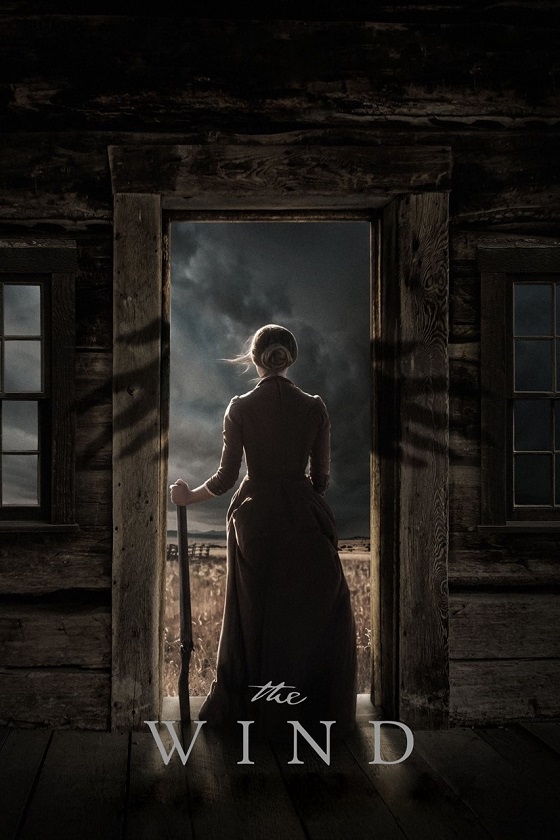
Following such delights as Curse of The Demon Mountain and Bone Tomahawk, 2019's The Wind combines two of my favourite genres - horror and Western - to create a compelling, character-driven, psychological drama.
In the late 19th Century, Lizzy Macklin (Caitlin Gerard) and her husband Isaac (Ashley Zukerman) have carved themselves out a homestead on the desolate American frontier.
When a new couple of settlers - Emma (Julia Goldani Telles) and Gideon Harper (Dylan McTee) - set up home about a mile away, the Macklins are initially delighted to have company, but become increasingly concerned that the new arrivals aren't cut out for the hardships required for living off the land.
The film, written by Teresa Sutherland (one of the staff writer's on Netflix's new Midnight Mass) and directed by Emma Tammi, opens with the aftermath of pregnant Emma's suicide.
Gideon and Isaac then ride off to the nearest settlement to make arrangements for the Harper's property to be shipped back East, leaving Lizzy to clean up and attend to the Macklin's smallholding.
The narrative then unfolds in a series of flashbacks, and flashbacks within flashbacks, intercut with Lizzy trying to cope on her own.
As well as learning that Lizzy and Isaac's son, Samuel, was still born, we also see that Emma was instantly attracted to the more "manly" Isaac, with the suggestion that the attraction may have been mutual.
However, when she falls pregnant, Emma - possibly influenced by a pamphlet on Demons of The Plains - rapidly descends into madness, making wild assertions about "something" being after her child.
She tells Lizzy that Gideon refused to believe her, dismissing her claims of hearing strange voices as simply "the wind".
In due course, though, we discover that when she was pregnant with Samuel, Lizzy also became convinced that there was some demonic force living in the area as well.
Are the women really being hunted by a "demon of the plains" or is it all in their imagination?
It's nearly impossible for most of us to comprehend the sense of terrifying, utter isolation and loneliness a person would feel in this situation, trying to carve out a living under such unforgiving conditions, without any semblance of modern communication nor any other living soul within miles.
Beautifully shot in New Mexico,The Wind does a magnificent job of charting the mental toll of this lifestyle, particularly as exemplified by the barnstorming central performance of Caitlin Gerard, who you might recognise from Insidious: The Last Key, American Crime, or The Last Ship.
With its emphasis on the atmospheric Western setting, there is an ambiguous, folkloric rural horror aspect to The Wind, which has led people to compare it to The Witch and - with its strong female cast - The Babadook.
The film has a Gothic quality to its narrative, heightened by Emma's own passion for Gothic literature, such as Mary Shelley's Frankenstein.
I would also add there's an element of John Carpenter's The Thing here as well, given how central feelings of isolation and paranoia are in Lizzy's story.
While the bulk of the horror is psychological, there's a single jump scare that works surprisingly effectively because this doesn't feel like a film where such a gimmick would be appropriate.
Initially a slow burn, The Wind gradually develops its creepy and unsettling tone as the layers of the onion skin are peeled back and we finally get a picture of what's truly happening.
Anyway, here it is... in all its badly drawn and misspelt glory.
Unfortunately, since I scanned the first issue back in 2020, the Sellotape that held the fragile pages of issue two together had lost its "stick" and as I picked it up and moved it to the scanner the pages came away in my hands.
Now, I hope I've scanned them all in the right order. The child-logic of my writing made the narrative a bit hard to follow, but I think I've got it.
Again, it's all about the chaotic adventures of my character, The Ray-Kid, teaming up with random Marvel characters such as Nick Fury, Dr Strange and Iron Man, while fighting The Hulk, a villain called Magno The Great (I suspect I was unsure about how to spell Magneto), and an assortment of horror film monsters, such as The Blob, Frankenstein's Monster, and The Mummy.
For some reason, the Marvel heroes, and I think Ray-Kid, are a team called The Inflans!
I was certainly no budding Jack Kirby (although I was, unknowingly, influenced by his work in the British reprint titles of the time).
It's easy to see why, later on, one of my art teachers at Skinners' would describe me as "the most artistically inept pupil he'd ever taught", but I like to think the two issues of Monster Mag have an innocent charm about them.
Sadly (or maybe not) this was the last issue of this comic ever produced, even though it ends with the proclamation that the next would feature a "great comp", by which I guess I meant "competition", although I have no idea what the prize could possibly have been!
And everything ends with the most gripping of cliffhangers: "Will The Hulk Drop The Tank? Find Out Next Week..."
Now here are (finally, and hopefully in the right order) the two stories contained within Monster Mag #2 (cover date, sometime in early 1976) - When The Blob Hits, He Hits Hard and The Beginning of The End.
I've finally got round to scanning in the first of my treasured self-made Monster Mag comics, written and drawn by yours truly when I was only nine.
Self-published, with a print run of one, I thought I had lost these treasures from 1976, so when I found them last year after we had moved I couldn't believe my good fortune.
Fragile homemade artefacts, held together with sellotape older than Rachel (honestly, she wasn't even born when I drew these comics), I carefully scanned issue one this week and cast a critical eye over my work.
I was clearly influenced by the oddly-shaped, art-distorting, black-and-white British reprint titles, such as The Titans, which explains the horizontal page orientation of Monster Mag, and quite possibly the prevalence of Marvel characters within its pages (Thor, Hulk, Doctor Strange, Nick Fury to name but a few).
These big hitters were mixed in with characters of my own creation, such as the delightfully cheesy Ray-Kid, who, without his protective helmet, found his entire head transformed into ball of energy.
The presence of several Universal monsters (the Wolf-man, Frankenstein's Monster, The Mummy, and the Invisible Man) also seems quite random, as I have no idea how I glommed on to them.
Perhaps I was watching those movies far earlier than I remember.
Given that I believe it was my gran who took me to see The Amazing Mr Blunden at the cinema around this time, and scarred me for life with a hypersenstive fear of dying in a house fire, it's quite possible that she was letting me watch Universal horror movies on her black-and-white TV as well (along with the Saturday afternoon wrestling that preceded Doctor Who).
I think it was also my gran who wrote the date (February 26, 1976) on a couple of the pages, because that's clearly not my handwriting, and I have a vague recollection that I drew these comics during a couple of my regular Saturday sleepovers at her house.
Please enjoy the dreadful drawing and appalling spelling of Monster Mag #1:
My pop culture Odyssey: a slice of super-powered geek life with heavy emphasis on pulp adventure, horror, comic books, westerns, superheroes, sci-fi, giant monsters, zombies etc


.jpg)