Monday, June 30, 2025

Lizzie Borden Took An Axe (2014)

Lizzie Borden took an axe
She gave her mother forty whacks
When she saw what she had done
She gave her father forty-one.
Lizzie Borden got away
For her crime she did not pay.
- children's skipping rope song

First, a confession. Somehow, somewhen, during my nearly six decades of life and absorbing random elements of pop culture, I managed to conflate alleged axe murderer Lizzie Borden with the deaf and blind, pioneering disability activist Helen Keller

Somewhere along the way I'd latched onto a self-invented reason for why Borden had become so infamous: not only did she murder her own parents, but she was deaf and blind as well.

Imagine my surprise when I sat down to watch Christina Ricci's portrayal of Borden and realised that the character wasn't actually blind or deaf! 

Turns out her notoriety arose from the simple fact she was a woman accused of these heinous crimes.

Lizzie Borden Took An Axe is the 2014 TV movie that opened the door for the bonkers and wildly fictionalised Lizzie Borden Chronicles, an eight-episode, limited series (contradicting the end of the movie where it states the sisters never saw each other again).

This show, set in the wake of Lizzie's trial, had Ricci and Clea DuVall return as the Borden Sisters in and around Fall River, Massachusetts, in late 19th Century America, the Gilded Age.

In this parade of glorious Grand Guignol, Lizzie has become a coldly, calculating serial killer who could give Hannibal Lecter or Jason Voorhees a run for their money.

Compared to the campy mini-series it spawned, Lizzie Borden Took An Axe plays things much straighter, focussing on the initial murders of Lizzie's father, Andrew (Pontypool's Stephen McHattie) and stepmother, Abby (Sara Botsford).

After establishing that Lizzie and her older sister, Emma (Clea DuVall) don't exactly live in a happy home - their father is controlling and disappointed in them (as they haven't found husbands yet), while their stepmother (apparently) cares more for her own relatives than Lizzie and Emma - the film adds to Lizzie 's criminal profile by depicting her as a habitual liar, thief, societal rebel, and shoplifter.

Random bits of potential obfuscation are thrown in to Stephen Kay's script (such as a lurking soldier, who may - or may not - have been a lover of Lizzie), but he and director Nick Gomez are quite adamant that there is no mystery here: they want you to know Lizzie did it.

There are frequent dream-like sequences and brief flashbacks to the murders, not really showing Lizzie committing them, but strongly suggesting that is the case.

The police are also convinced that Lizzie did the deed, while - once the case comes to trial - her lawyer Andrew Jennings (Billy Campbell) plays up her innocent nature, the fact that she's a Sunday School teacher, and pulls out the old "how could a woman do this?" defence.

At point, the court learns of another random murder of a woman in her home that has just occurred, mimicking the style of the Borden murders, but then this is dismissed - without investigation - and never mentioned again. 

Eventually the jury find Lizzie not guilty and she is freed.

However, the film's denouement, where Lizzie whispers her "confession" to Emma (intercut with more gruesome versions of the earlier flashbacks that leave no doubt as to who was swinging the axe) would have come as more of a surprise twist had the film not spent the previous 80-or-so minutes pointing the finger at Lizzie, saying: "She did it, but don't tell anybody!"

Every so often, it looks as though Lizzie Borden Took An Axe is about to explore such topics as "celebrities on trial" or "trial by media", but then it veers away from those topics just as quickly.

Honestly, I think, taking the two shows together, I feel the original murder, if better framed as a mystery (which it remains in reality), would have been more deserving of the mini-series treatment.

That would have allowed time to explore all the little plot hooks that pop up in the movie and are then forgotten in the next breath.

As wild and, yes, entertaining as The Lizzie Borden Chronicles was, to my mind, nothing was gained by taking a real-life character like Lizzie and transforming her into a serial killer in this manner.

The mystery around the single incident that made her name is enough.

Following it up with pure, over-the-top, fiction is only going to muddy the waters, mixing fact with fiction in this way, so that some viewers will no doubt mistake one for the other.

It's all too easily done.

Sunday, June 29, 2025

And Now For Something (Almost) Completely Different

My bargain haul
Like a great many geeks of a certain age, I love - and am continually inspired by - Edgar Rice Burroughs' John Carter of Mars series of pulp novels.

Way, way back in 2018 Modiphius Entertainment was Kickstarting a John Carter roleplaying game (one of their 'everything at once' splurge releases of multiple books, miniatures, dice, tile sets etc) and, for a minute, I was 'all-in'.

But then, it struck me that (a) I'm not really a fan of their 2d20 house system, (b) releasing everything at once means a LOT of reading (and their books tend towards the tiny text-heavy), and (c) none of my gaming group had ever expressed any interest in Barsoom or John Carter, which would mean having to 'teach' them all about the Martian cultures, language etc on top of a new set of rules.

So, I cancelled my Kickstarter pledge and consigned the game to the dusty halls of my "what could have been" dream storage unit.

As far as I could tell, after the initial gush of books (that were part of the Kickstarter), Modiphius didn't do anything else with the setting and let it fade, with the system only popping up in the occasional sale listing.

Books from Modiphius tend to be beautifully produced, often hardbacks, and sport a heft price tag. 

I've got their Conan The Barbarian core rules book and the more recent Dune one, but mainly to look nice on my shelves. Both of these were acquired via eBay for a fraction of their 'recommended retail price'. 

Conan - like John Carter - is another property that Modiphius no longer supports (although old John Carter books remain available at full retail cost). 

The license for Conan has reverted to Heroic Signatures, who are publishing a fresh roleplaying game through Monolith, which is due out later this year.

Conan RPG from Modiphius
The last, active, mention of John Carter in connection to roleplaying I remember seeing was a 5th Edition Dungeons & Dragons supplement as part of a Kickstarter for an audiobook series.

And with that, John Carter - as a roleplaying game - slipped out of my mind.

Until, the other day, when an advert popped up somewhere for a Modiphius "moving warehouse" sale. And I thought: why not take a look?

And I was gobsmacked: the few John Carter items they had listed were going for pennies.

I didn't really need a new game, but how could I resist the core, hardback, rules for £4; tile sets (airships and ruins) for £1.50 each (which have potential utility in a variety of settings); and a player's guide and character cards/tokens set also for £1.50 each?

With postage, I got this lot (see picture at top of article) for under £20, saving almost a hundred quid on their original list price. 

Will I do anything with these rules? Who knows? Or will they just sit prettily on my shelves next to Conan and Dune?

At least, now, seven years later, I actually have the John Carter core books in hand, and I'm sure there are other companies out there manufacturing John Carter-inspired miniatures to sword fight across the deck of my airships!

Of course, I could let this slide on a technicality by reminding you that John Carter himself - before he was transported to Barsoom/Mars - was an American Civil War veteran, a Confederate captain from Virginia, which kinda makes him part of my on-going Western theme.

Saturday, June 28, 2025

Behind-The-Scenes of Open Range

Open Range is a beautifully made, underrated Western movie directed by and starring Kevin Costner as Charley Waite, alongside Robert Duvall as Boss Spearman.

So this documentary will break down 20 things you probably never knew about Open Range (2003), covering all the most interesting easter eggs, references and behind the scenes stories from the making of this modern western, including the reference to Unforgiven that you missed, how the movie interfered with Quentin Tarantino and why Kevin Costner and Robert Duvall were secretly in a whole lot of pain for most of their scenes.

Friday, June 27, 2025

Black Adam (2022)


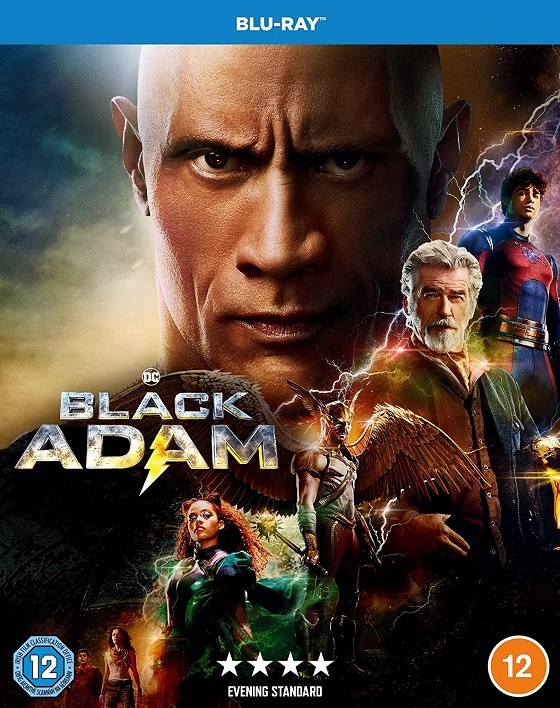
Thousands of years before Billy Batson was granted the power of Shazam, the Wizards chose a rebellious young slave in the kingdom of Kahndaq, where a corrupt king is forcing his citizens to mine for the magical Eternium metal necessary to forge the powerful Crown of Sabbac.

Flash forward 5,000 years and Kahndaq is now controlled by the mercenary army of Intergang (a major criminal organisation in the world of DC Comics), but archaeologist Adrianna Tomaz (Person of Interest's Sarah Shahi) has a lead on the location of the Crown of Sabbac.

However, her expedition is ambushed by Intergang soldiers and her only hope is call upon the land's mythical protector... and so ends up summoning Teth Adam aka Black Adam (Dwayne 'The Rock' Johnson).

Black Adam makes short work of the Intergang army, but in the process attracts the attention of Suicide Squad's Amanda Waller (Viola Davis) who dispatches The Justice Society (the very first comic book superhero team, from the 1940s) to bring him in.

Without any fuss we are introduced to team leader Hawkman aka Carter Hall (Leverage's Aldis Hodge), powerful sorcerer Dr Fate aka Kent Nelson (James Bond himself, Pierce Brosnan), the delightfully clumsy and goofy Atom Smasher (Noah Centineo) and Cyclone (Quintessa Swindell).

Not only do the heroes find their hands full when they confront Black Adam, but they find the people of Kahndaq are against them as well, being more inclined to support their home-grown saviour than 'invading' Americans.

Directed by Orphan's Jaume Collet-Serra, Black Adam really caught me by surprise with its superb balance of action and character work.

One of the best recent DC superhero movies, and certainly better than both of Zack Snyder's first two Superman films, Black Adam finally presents a convincing justification for the harder edge that DC films are perceived to have over those of MCU. 

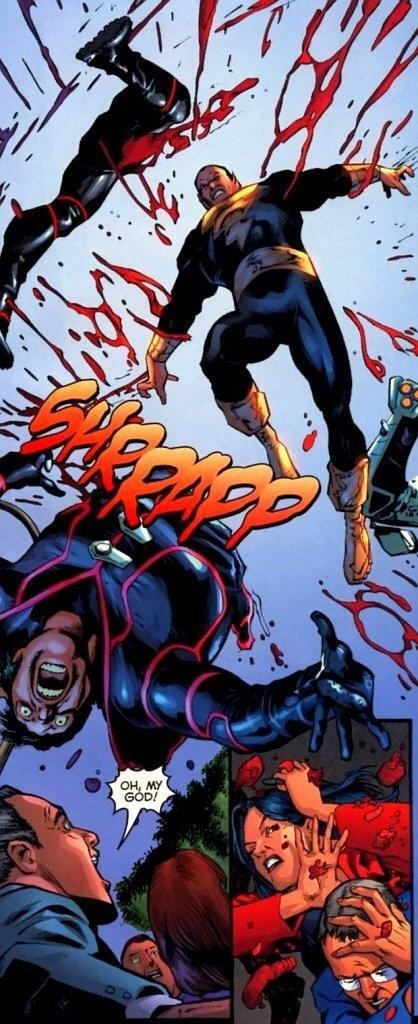
I've always had difficulty getting my head around the idea of Black Adam as a hero - or even anti-hero - because of one particular image that is forever burned into my brain from 2006's comic book series 52 (issue three) ... when he suddenly ripped the B-list villain Terra-Man in half.

The fate of Terra-Man at the hands of Black Adam

But the movie presents a genuinely rounded view of Adam, with his origin story turning out to not be as straight forward as we presumed, that goes out of its way to explain his complex character.

In fact, to my eyes, pretty much everything about Black Adam is perfect, from the set design to the costumes, creating a sense of verisimilitude that makes the film feel like a comic book brought to life.

The film only really goes off the rails slightly in the third act, with the introduction of the demonic villain Sabacc, a visually stunning entity that is sadly devoid of any personality and whose sole purpose is to serve as a punching bag for the protagonists.

There was also a suggestion quite early on that the only thing that could really hurt Adam was Eternium, but that seems to soon be forgotten in all the excitement.

Beyond the obvious Shazam! connection (check out the mid-credit scene in Shazam! Fury of The Gods where Waller tries to recruit Captain Marvel for the JSA), Black Adam has lots of Easter Eggs entwining it in the broader DC Universe of movies and there's even an awkward mid-credit scene here (clearly pieced together from shots of the two characters not in the same room) designed to further cement this.

It's almost a shame then that Warner Bros decided to reboot the whole cinematic shindig under the auspices of James Gunn because with Black Adam (and the far weaker Shazam! Fury of The Gods) you get the feeling that this particular cinematic universe was just starting to pull itself together.

I really want to see Dwayne 'The Rock' Johnson's Black Adam in action again in the new Gunn'verse, perhaps fighting alongside (a recast) Captain Marvel and other more traditionally heroic comic book characters.

Shazam! Fury Of The Gods (2023)


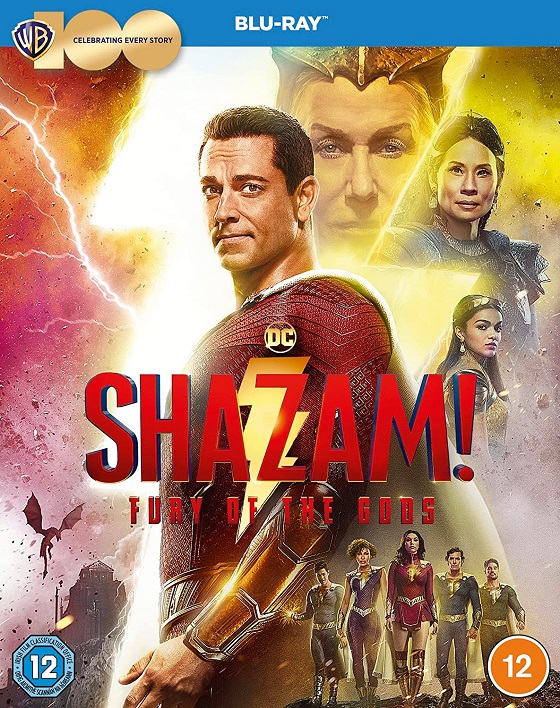
I hope Helen Mirren got paid a lot of money for this because Shazam! Fury of The Gods is a right mess.

There are bits that are great, but also a lot where director David F. Sandberg's inconsistent tone doesn't seem to know if this is a "DC dark" film or a slapstick comedy.

For instance reasonably early on a seemingly decent person is brutally murdered in front of one of the heroes (who, admittedly, is horrified), but this is never mentioned again, even though this was clearly someone that Billy Batson (Asher Angel) would have known.

It turns out that when Captain Marvel (yes, I'm calling him that because that's his name; why would a superhero have a name that he can't say without transforming back into a kid?) broke the staff at the end of the last movie he also rent the barrier between worlds (or something).

This allowed the Daughters of Atlas - Hespera (Helen Mirren), Kalypso (Lucy Liu), and Anthea (Rachel Zegler) - through to retrieve the two halves of the staff, and stick it back together.

Their plan is then to retrieve a seed from the Tree of Life and restore their godly realm to its former glory. 

However, human-hating Kalypso goes full Khaleesi, riding a massive CGI dragon, and plants the seed in the middle of Citizens Bank Park, Philadelphia (home of the Philadelphia Phillies).

Because it's not in divine soil, the tree becomes corrupted and starts sprouting monsters from Greek mythology (manticore, cyclops, harpies etc).

Meanwhile, Captain Marvel's extended family of fellow superheroes keep getting stripped of their powers by Kalypso and the magic staff, and it's left to our main man (Zachary Levi) to face the Big Bad.

After the conflict is set-up in the first act the bulk of this overly long 130-minute movie is a massive superhero slugfest, which only comes into its own sporadically.

While Mary Marvel (Grace Caroline Currey) and Freddy Freeman (Jack Dylan Grazer) have a fair share of the plot and the action, the other member's of Billy's family are largely reduced to space-filling background characters, although young Darla Dudley (Faithe Herman) does step up at one point.

This sequence - which elicited the biggest laugh from me - must have been paid for by the Wrigley Company because the Skittles product placement was off the chart!

I'm not a fan of superheroes having their powers removed or nerfed, even if the reasoning here made more sense than the treatment the Hulk got in the later Avengers movies.

It just feels like a cop-out by the writers, having been given a scenario where there's a team of heroes, why not find a clever way to use them?

For me, one of the unique aspects of the Captain Marvel comics of my childhood was the fact that he had a family of similarly powered heroes, a ready-built team, to call upon.

If you introduce that then take it away, that's an unnecessarily cruel bait-and-switch in my book.

And I realise that Dame Helen Mirren has done big budget action movies before, but I can't help feeling that she turned up, delivered her lines impeccably, took the cheque and flew off of to wherever she likes to hang out and chill.

As awesome as she is in this role, there was no need for a global icon of her stature to play the part of Hespera. 

That said there are standout moments of wit and humour in Shazam! Fury of The Gods, from the youngsters having turned the Rock of Eternity into a proper kids' hangout to the genuinely surprising cameo (see, it pays to avoid spoilers, even this long after a film has hit cinemas) during the film's denouement, and a couple of solid "mid/post-credits" scenes (any appearance by Mr Mind is worth the price of admission... and this was especially amusing).

And matters certainly improve in the protracted beat-'em-up once the Daughters of Atlas start feuding among themselves, and the climactic punch-up between Captain Marvel and the dragon is visually impressive.

Ultimately quite mediocre and not up the potential suggested by the original movie, Shazam! Fury of The Gods suffers from a paucity of story and surfeit of characters, meaning many of the protagonists don't really contribute that much.

Shazam! (2019)


I'm old enough to remember when Shazam was called Captain Marvel and Marvel's Captain Marvel was Ms. Marvel.

Which is perhaps why I had some issues with Shazam! (the movie), even though it is essentially Big retold with superpowers. And everyone loves Big, right?

Even the makers of Shazam!... who acknowledge this obvious influence with a little nod from a giant musical keyboard scene.

Shazam! essentially tells two distinct stories: one about a troubled foster child, Billy Batson (Asher Angel) doing everything he can to find his birth mother.

So driven is he that he runs away from multiple foster homes, and keeps people at arm's length emotionally.

But parallel to this earnest tale of a young man's quest to find a family, we also have the story of Billy Batson being chosen by an otherworldy wizard - also called Shazam (Guardians Of The Galaxy's Djimon Hounsou) to become a 'magical champion'... called Shazam.

Whenever Billy says his name, he transforms into his superhero identity (Chuck's Zachary Levi), gaining the powers of superstrength, invulnerability, flight, speed, and lightning blasts... while retaining Billy's mind.

The problem is though - having removed any mention of Captain Marvel from the equation - Billy can't tell anyone his superhero codename because he will then transform into his alternate identity.

This becomes a running gag throughout the movie, as his 'sidekick', foster brother Freddie Freeman (Jack Dylan Grazer) - possibly my favourite supporting character in any modern superhero flick - keeps offering unsuitable suggestions.

I realise you could argue this isn't a big deal, but it is if you look at this through the spectrum of comic books - the source material for these movies - where the "superhero identity" is a major element of a hero's "brand".

Shazam! draws heavily from Geoff Johns' New 52 iteration of the character, which reimagined the original wholesome Billy Batson (who you could understand being considered "pure of heart" by a supernatural wizard and deserving of these great powers) into a bit of a brat.

And the thing is, for at least the middle third of the movie, after Billy is given superpowers, he becomes an even bigger brat (as Freddie points out), only really coming into his own once his family is threatened by a similarly-powered individual called Dr Sivana (Mark Strong).

This is, overall, a fun film, which digs deep into the old - and often totally bonkers - Captain Marvel mythology (including the introduction - in the obligatory mid-credits scene - of one of the greatest villains in comics. You can catch a glimpse of him in a very early scene, if you know what you're looking for. I really hope his next live-action appearance can do justice to such a bizarre character).

The central plot - around which the stories of Billy's personal life and superheroic identity revolve - is very linear: bad man gets power, good boy gets power, boy wastes powers, man wants boy's power as well, boy realises how important his powers are, man and boy fight.

Shazam! also falls into that classic old Marvel Cinematic Universe trap of pitting the main character against a dark reflection of himself (Sivana is, here, for all intents and purposes, a 'dark' Shazam, even though we discover later he has limitations that Billy doesn't).

As good as Mark Strong is as the crazed Sivana, this is a bit of a shame given the breadth of exotic and villainous characters the filmmakers had to draw from in the old Captain Marvel comics.

Every so often, when it remembers its Big roots, Shazam! injects some levity into its drama, with Sivana's 'supervillain speech' being a major laugh-out-loud moment.

While it never veers into full Batman v Superman grimdark territory (and their existence is readily - and pleasingly - acknowledged here), there's still an occasionally jarring uncertainty about just how funny this film is allowed to be.

Ultimately, as often happens with comic book movies, it's the potential of what could be done next with the characters and their mythology that turns out to be more inspiring than the actual two-hour film you've just sat through.

Don't get me wrong, I really enjoyed Shazam! - despite all its narrative faults (much of which came from its choice of source material), I just can't wait for the inevitable sequel, especially with the introduction of the extended Marvel family (although we can't call them that).

I always loved the fact that Captain Marvel came with a ready-built team, united by familial bonds.

This is one of the things that makes the character special - and enduring - and I really hope that the sequel (and any future films) build on this, as well as digging deeper into the character's crazy rogues' gallery for its villains.

After the over-the-top excellence (and audience appreciation) of Aquaman, I thought Shazam! would have been the perfect vehicle to ramp up the gonzo stakes even higher.

Hopefully, those delights are still to come...

A Quick History Of The Captains Marvel

From the Marvel Family to Mar-Vell to Carol Danvers, this is the history of the Captain Marvels, exploring the fascinating historical relationship between 2019's two biggest superhero debuts, Captain Marvel (starring Brie Larson) and Shazam! (starring Zachary Levi).
The Echoes of Shazam! by Alex Ross

Thursday, June 26, 2025

THROWBACK THURSDAY: My First VHS


The first film I saw on home video was Battle Beyond The Stars, which my parents rented for me on the way home from purchasing our first (top-loading) VHS player.

However, the first tape I actually owned (and still do) was Raiders Of The Lost Ark, which my parents gave me as a Christmas present when I was 15.

In the early days of VHS, when we were just renting the cassettes, I had a policy of watching every film five times before we had to return it.

You have to remember, back in the olden days, films came on TV (or at the cinema) and if you didn't watch them when they were shown, you had to wait until they were shown again (which could be years later... or never).

Until 1982 (when the creatively named Channel 4 began broadcasting), we only had three channels of television to chose from in the UK.

So, to a budding cinephile and storyteller, the invention of home video was a game-changer.

Imagine, one day not being able to watch a film you wanted to, and the next day you could watch it as many times as you liked, whenever you liked.

For months, I even kept a log of every film I'd watched on tape (until I missed one, and that threw my system completely out of whack and I gave up on that exercise... See, I had control issues even back then!).

One of my few remaining vivid memories of my childhood is - rather bizarrely - crawling under my parents' bed to see what they'd got me for Christmas and finding the Raiders tape.

I was so excited! Even though it wasn't going to be a surprise now, I knew I would soon be able to watch this amazing movie as often as I wanted.

And I suspect, although I lost count, I watched that tape of Raiders Of The Lost Ark (which remains the film I've seen most often in the cinema) way more than my mandatory 'five times minimum'.

Never Sleep Again - The Elm Street Legacy (2010)


If you are at all 'into' the Nightmare On Elm Street series of horror films - as I am - then you owe it to yourself to seek out the incredible documentary Never Sleep Again - The Elm Street Legacy.

Although clearly a labour of love, this FOUR HOUR documentary isn't a straight lovefest for the franchise, but a proverbial 'warts-and-all' behind-the-scenes insight into the making of the series, chronicling the highs and lows, the conflicts, the cut corners etc offering an unrivalled insight into the world of low-budget movie making.

Running parallel to the main arc of the documentary is the story of how A Nightmare On Elm Street effectively 'made' New Line Cinema, the company that would eventually bring us Peter Jackson's magnificent Lord Of The Rings trilogy.

Each movie - from the original through to Freddy Vs Jason, and embracing the short-lived TV spin-off, Freddy's Nightmares - gets its own chapter, with a wonderful stop-motion animation bumper, and is packed to bursting point with talking heads of the majority of the main actors and movie crew, unseen footage and photographs etc

Unsurprisingly, Johnny Depp and Patricia Arquette (whose careers began in the franchise) are conspicuous by their absence, as is Peter Jackson (who wrote a draft of one of the later movies), but there are so many other - more than 100 - interesting interviewees with great things to say that you don't really mind (and didn't really expect them anyway).

For instance, I'm far more interested in Wes Craven's opinions of the sequels to his classic original or his insights into the post-modern brilliance of Wes Craven's New Nightmare, and Robert Englund (the one and only Freddy Krueger) is always good value for money.

Of particular interest are the revelations that several of the films were effectively 'made-up-as-they-went-along' as directors and crew raced to hit pre-determined release dates with unfinished scripts - which, I guess, explains the "dream-like" quality of some of the stories!

Narrated by Heather Langenkamp (aka Freddy's nemesis Nancy from the movies), the film also examines Freddy's transformation from child-murdering supervillain into cartoon cultural icon, and various attempts to reclaim the character as a genuine figure of fear.

The two-DVD set includes a disc of extras as fascinating as the main feature covering topics such as the Freddy Krueger comics and novels, hardcore fans (Fred Heads) and a tour of the movie locations used in the original Nightmare On Elm Street.

Insightful and entertaining, Never Sleep Again is the ultimate, definitive insight in to one of the truly iconic figures of horror cinema, who now ranks alongside Dracula, Frankenstein's Monster, The Mummy and The Wolfman in the psyche of horror-loving film fans.

Tuesday, June 24, 2025

Zack Snyder's Justice League (2021)

Building on the foundations laid in Man of Steel and Batman v Superman: Dawn of JusticeZack Snyder's Justice League is a four-hour epic that sweeps its audience up and carries you along, whether through tightly-scripted character beats or frenetic, supercharged fight sequences.

Gone is the element of "heroic cruelty" that rather tainted the previous two films, this is pure, old fashioned, comic book action, served in a modern, celebratory, style.

Having sworn a pledge on Superman's grave, Bruce Wayne aka Batman (Ben Affleck) teams up with Diana Prince aka Wonder Woman (Gal Gadot) to hunt down fellow metahumans and form an alliance against the coming darkness foretold by Lex Luthor (Jesse Eisenberg).

Eventually they build a team consisting of Victor Stone aka Cyborg (Ray Fisher), Arthur Curry aka Aquaman (Jason Momoa), and Barry Allen aka The Flash (Ezra Miller), to face down the alien warlord Steppenwolf (Ciarán Hinds), who is preparing the Earth for the arrival of Darkseid (voiced by Ray Porter), the definitive uber-bad guy in DC Comics.

I don't want to dwell too much on the previous, theatrical, iteration of Justice League, as reshaped by the disgraced Joss Whedon, when he took over the project after Zack Snyder had to step away due to a dreadful family tragedy.

However, if you have seen that then you will recognise certain scenes and moments in this new cut, but so much of it is new - to us - material that was shelved for the version that was released four years ago.

The general thrust of the story is similar, but better developed, explored, and explained now that it's in the hands of its original creator.

All the characters come across as more three-dimensional, and Cyborg has been elevated from an almost incidental player back to the heart of the story, as Zack and scriptwriter Chris Terrio envisaged him.

Cyborg has been on my radar for as long as I've been collecting comics, as he was a founding member of the Marv Wolfman/George Perez era of the New Teen Titans, which transformed me from a dabbler in comics to a full-on collector and addict.

I have to be honest, though, until this movie, I'd never found him that interesting a character, but Zack (and Chris)  - and, of course, Ray Fisher - have totally turned me round on Victor Stone.

I'd been looking forward to seeing Zack Snyder's Justice League since it was announced, but had always considered it simply an "Elseworlds" alternate take on the characters, and a chance to see what should have been in 2017 under better circumstances.

And I'll watch any big budget superhero flick eventually, because I still can't believe we live in age where the comics I read as a child (and am still regularly reading) are being made into box office-topping blockbusters.

With its prevalence on the silver screen and small screen, the superhero genre has become as ubiquitous as westerns were in the early days of Hollywood and television, the new American (global?) mythology.

However, Zack Snyder's Justice League far exceeded my expectations and deserves all the kudos that I hope were showered upon it.

It may be four hours long, but it doesn't feel it. Never does the pace drag, nor are there any corny or uncomfortable scenes, or substandard CGI creations, to take you out of the moment.

Let's put it this way: about two hours in, I was already planning on watching it again.

Without a doubt, Justice League is Zack Snyder's tour de force.

It's such a pity that Warner Bros - for a minute - decreed that the earlier, inferior, cut of the film remained canon in the DC Extended Universe, when really all copies of it should have been shovelled into the same landfill as the E.T. The Extra-Terrestrial video game.

Yet, while Zack Snyder's Justice League is a magnificent conclusion to the Snyderverse trilogy, it's highly unlikely that we will see the continuation of this storyline and the resolution of the movie's apocalyptic cliffhanger.

Now, it appears as though we are getting into an era where Superman (and the DC Universe as a whole) is under the stewardship of someone who understands the four-colour comics of old and the positive value of superheroes. 

Snyder has had his moment, but now we are moving into the light of James Gunn.

Let's hope his Superman is everything we want it will be.

Batman v Superman - Dawn Of Justice, Ultimate Edition (2016)


My race through the Snyderverse continues with probably its most divisive entry, but for all its faults (and they are plentiful), Batman v Superman: Dawn Of Justice - in all its three-hour, ultimate edition glory - is a surprisingly good superhero movie.

The further we get from the initial hullaballoo around this film, and the more times I watch it, the more I find I get from it.

Like Man of Steel, it suffers from some egregious missteps that, as with the original curate's egg, were allowed by many to spoil the enjoyment of the whole.

But as I grow older, that one troublesome dialogue exchange that spawned a million memes (which we will get to later), doesn't bother me so much. Yes, it's still a dreadfully contorted - and unconvincing - exchange, but is, ultimately, small potatoes in a bombastic three-hour film.

A deranged Lex Luthor (Jesse Eisenberg) turns the world against Superman (Henry Cavill), then engineers a fight between the Son of Krypton and Batman (Ben Affleck), before unleashing a CGI Kryptonian monster, Doomsday, on Metropolis for reasons that aren't exactly explained.

Jesse Eisenberg is a fantastic actor and his young Luthor blends the modern age comic book take on the character with the mad scientist version in the older comics - with a heavy emphasis on the "mad" part.

I think we're supposed to take it that Lex is jealous of Superman's powers, but, despite his Machiavellian machinations, the one part of his scheme that is never truly made clear is his motivation.

While Ben Affleck's Bruce Wayne/Batman is impressive, the stand-out character of Dawn Of Justice is Gal Gadot's Wonder Woman.

Although her presence is only slightly more justified here than Spider-Man's introduction in 2016's Captain America: Civil War, her grin-inducing impact on the audience is about the same.

Her all-too-brief appearances are certainly helped by the incredible Wonder Woman theme performed by cellist Tina Guo, that still make me tingle with geeky excitement every time I hear it.

There are a couple of sequences that felt superfluous, when looked at just in the context of BvS.

However, knowing now that these were planting seeds for the Zack Snyder's Justice League movie (we shall ignore the Josstice League iteration, even though officially it remains the canon version of the film for the DCEU), we can appreciate that moments like Batman's striking 'vision' of the future, complete with Darkseid mise-en-scène and parademons are more than just great fan service

When BvS was first release, I read a number of industry people championing director Zack Snyder's love of comics, which is as nebulous a comment as saying someone "loves books", but whatever the truth of the matter it's clear that he just doesn't really get Superman.

Snyder is on record as saying he likes dark comics with sex and violence in them. And, while I suspect he may have been 'playing this up' for the expected shock value, that just isn't my (and a lot of people's) idea of Superman.

As, hopefully, you read earlier, I enjoyed his Man Of Steel as spectacle, but it didn't deliver a Superman that I recognised or could relate to.

While still quite moody here, Superman is certainly given the space to become a bit more like his positive and heroic comic book portrayal.

His Clark Kent alter ego shines (despite butting heads with a a very negative Perry White in Laurence Fishburne), but Synder's penchant for darker, anti-heroes comes to the fore in his presentation of Batman.

Again, a lot is left unexplained (Batman's been operating in Gotham for 20 years but the Daily Planet is unaware of him? Why - oh why - does he go round branding villains?), but he's got the tech, the brains, the charisma, and the drive to bring the Dark Knight to life.

One of the positive things about Batman v Superman is that it doesn't try to obfuscate the 'secret identities' of its leads for the audience, it's just a given that Bruce Wayne is Batman, Diana Prince is Wonder Woman, Clark Kent is Superman etc, without trying to explain it all (again).

Like Man of Steel, this initially appears to be a triumph of spectacle, but, again, in Batman v Superman (the Ultimate Edition anyway) we have a story that justifies the action and - generally - everyone stays reasonably true to the comic book source material.

However, rising above all the plot holes and strange character choices, the most awful, groan-worthy moment in the whole script is the "Martha" scene.

I'll be honest, if I'd tried to present that - with a straight face - in one of my scripts at university I'd have been laughed off my Scriptwriting degree course.

There was enough cheese in that scene to choke all the mice in North America. Especially coming in such a "serious" and "realistic" take on the superhero genre, it totally takes you out of the moment.

It's bizarre that amidst all the explosions and property damage, all the spectacular superheroics and tension, the line that stays with you - because it grates so much - is something so mundane and corny.

But that aside (and it could so easily have been avoided by changing the line to something about his "mother", which Bruce would have reacted to in much the same wayBatman v Superman - Dawn Of Justice is definitely a step in the right direction from Man of Steel and paves the way for Zack Snyder's Justice League.

Man of Steel (2013)

With the next iteration of Superman just around the corner, I've decided to take a whistle-stop tour through the Snyderverse take on the iconic character. 

I started with my first ever rewatch of Man of Steel, which I haven't seen since I originally saw it on its home video release and was simultaneously awed by the spectacle and disappointed by the story.

Now, removed from that original atmosphere by many years I find myself pleasantly surprised.

Man of Steel is a lot better than I remember it.

However, it still has an unforgivable problem in its finale: the Superman I grew up reading doesn't kill.

He always finds a different way to deal with a problem.

How else could he have resolved the situation? I don't know, I'm not Superman (Henry Cavill).

That's one of the things that makes him Superman and makes him better than General Zod (Michael Shannon).

The fact that he doesn't see that is due in part to the strange attitude his human-father, Jonathan Kent (Kevin Costner), tried to instil in young Clark Kent that he had to guard the secret of his abilities at all costs, even if it meant letting people die.

But again, a young Superman should have been able to find a way to save people and conceal his super powers at the same time.

Outside this rather major character flaw, Zack Snyder delivers a fantastic, action-packed, superhero origin story, from David Goyer's scipt.

I had totally forgotten the impressive, alien-realisation of Krypton at the start of the movie, before his biological father Jor-El (Russell Crowe) and mother Lara (Ayelet Zurer) send their infant child off into space just ahead of the planet's destruction.

If this Superman had gained better box office traction and been allowed to run through multiple sequels, I would have loved to have seen - somehow - a revisit to Krypton as envisaged by Zack Snyder.

Henry Cavill cuts a fine, square-jawed, figure as Superman when dressed in the red and blue costume, and there are moments when you get fleeting reminders of Christopher Reeve (the definitive live-action Superman).

I even found myself warming up to Amy Adams as Lois Lane. Again, she's no Margot Kidder, but actually following the growth of the character, and her relationship with Clark/Superman, I realised that she was more 'Lois Lane' than maybe I had previously given her credit for.

One of the issues I've had with the Snyderverse was the grey and grim filter everything appears through, but approaching this with an open mind - and eyes - I've come to appreciate the fact that, taking the film as a whole, it isn't as grim as the initial trailers portrayed it.

The film still errs towards Zack's trademark grey palette a bit too much on occasion, and there are too many grey/black costumes for my liking, but the story is much stronger than I recall from my previous viewing. And story, ultimately, always triumphs for me.

Man of Steel is flawed, but it isn't quite the "style-over-substance" affair it was originally painted as.

That said, collateral structural damage has always been a given in comics and films when it comes to monumental superhero slugfests, but the destruction wrought in Man of Steel is off the chart.

Smallville is pretty much laid waste in the initial attack by Zod and his fellow Kryptonians (and a significant amount of it is caused by Superman himself), but then when the fight moves to Metropolis, the devastation gets cranked up to 11.

I know Superman ultimately saved the people of the city (and thus Earth), but, seriously, they need to look around themselves and tally the cost. Who pays for all that damage? I bet 'superhero fight damage' isn't covered by insurance.

I realise that this was his first battle, but you'd think the US Government - or the United Nations - might suggest some kind of training course, to reduce the large-scale collateral damage in any future superpowered conflicts.

Monday, June 23, 2025

Bringing Judge Dredd To Life

I've recently rewatched both cinematic efforts at bringing 2000AD's legendary lawman Judge Dredd to the big screen and I have to say my opinion on both remains unchanged.

Each movie - 1995's Judge Dredd with Sylvester Stallone in the title role and 2012's Dredd, starring Karl Urban - gets some things right, but also gets an awful lot wrong in its attempted adaptation.

Take Judge Dredd: the first eight minutes - the fly-through of a comic accurate Mega-City One and the Block War - are near perfect... right up until Stallone’s Dredd rolls up and slurs out “I am the law”.

In fact, things don’t really go off the rails until a quarter of an hour in and Dredd takes off his helmet - taking with it any credibility the film might have had.

So much thought has gone into the staging, the look, the costuming, and other characters (The Angel Gang and the A.B.C. Warrior are wonderful, for instance) that it blows my mind that that attention to detail was lost completely in the actual script and the all-important depiction of Dredd himself.

Meanwhile in the more recent attempt (which I can't help but think pandered more to those members of the Dredd fanbase who perhaps don't see the satire in the character), while it may have nailed things with Urban as Dredd (never taking his helmet off, of course) and Anderson (Olivia Thirlby), it totally screwed the pooch with its version of Mega-City One.

While Stallone's claustrophobic, future city not only looks like The Big Meg seen in the comics, as well as bearing a passing resemblance to the Los Angeles of Blade Runner and Coruscant in Star Wars: Revenge of The Sith, the city we see in the 2012 movie could be almost any contemporary city (with a handful of high-rise "blocks" CGI-ed in for good measure).

Judge Dredd's Mega-City One
Dredd's Mega-City One

Its roads are empty and buildings are spaced far apart. Even the civilian costumes and vehicles are just lifted from everyday 21st Century life, with no attempt to "sci-fi" them up.

The Judges all get nice paramilitary outfits, that bear a passing resemblance to the source material, but it's Stallone's movie that actually gives us "proper" Judges' uniforms.

There's no denying that Dredd is the better movie of the two, but its blatant disregard for so much of what makes Judge Dredd 'Judge Dredd' is grating.

Mega-City One and its inhabitants are as crucial to the verisimilitude of a Judge Dredd movie as the portrayal of Joseph Dredd himself, so what we really need is someone with the design chops of the team that built the world of Judge Dredd to work with actors who understand the material (as we saw in Dredd).


With the Judge Dredd: Mega-City One TV series - that was announced in 2017 - apparently, disappointingly, mired in development hell (I believe the big issue is financing, but don't quote me on that), it looks as though the best adaptations of the Dredd are still coming from unofficial/fan sources such as the incredible Judge Minty, from 2014 (see below), and this short animation, from 2019:

Look at the promising depiction of MC1 in this poster for the proposed TV series

It's Nearly Superman Time

Sunday, June 22, 2025

PROJECT 60: Okay, I Might Have A Problem 😱


Despite having already named Go Fer Yer Gun! as my favourite roleplaying game set in the Old West, and having an ever-expanding collection of Deadlands material from across the ages, I still managed to purchase two more distinctly different games in the last seven days: Tales of The Old West and Shooting Iron.

While I admire Go Fer Yer Gun! for its elegant simplicity, Shooting Iron is another d20-based system (class, level, hit points et al), with a heap of background material (although nothing on Native Americans; they were supposed to be covered in a supplement, which has yet to see print seven years after the core rules were published).

I could see this nicely written and laid out, 200-plus page, tome being a source of "houserules" and additions to a possible GFTG! campaign, with little need for much tinkering with the stats and mechanics. 

On the other end of the spectrum, Tales Of The Old West employs the Year Zero Engine, the award-winning d6 dice pool mechanics that power such Free League roleplaying games as ALIEN, Tales From The Loop, The Walking Dead etc

I'll admit the book is quite intimidating. Tales of The Old West may be too complicated for my little noggin, although one of our group mentioned to me in the past of her experience playing ALIEN, so that could help persuade me (always helps to have someone else at the table who knows the rules of the game you are playing).

Although a licenced product (it is produced by Effekt) the book has the high production and art standards consumers of Free League games have come to expect.

Of course, these "straight" West books are just the latest addition to my RPG library.

The other week I picked up a couple of "Weird West" games: Down Darker Trails (a Call of Cthulhu supplement) and We Deal In Lead (based heavily on Stephen King's Dark Tower saga).

So, now, I have six Western-themed roleplaying games: three with ghosts and monsters and three for playing pseudohistorical reality!

What does this all mean for my current superhero campaign that I'm running for the Tuesday Knights?

Maybe nothing, but maybe something. 

I guess it depends if the current game has legs (we've only managed three sessions in five months, for various reasons). 

Saturday, June 21, 2025

Spaghetti Westerns Off The Beaten Track

Tired of the same Spaghetti Westerns on every list? In this video, we spotlight 10 hidden Spaghetti Western gems that go beyond Sergio Leone.

These underrated Western movies bring brutal shootouts, morally grey outlaws, and some of the best Italian Western storytelling ever filmed.

From the haunting revenge of Death Rides a Horse to the political grit of A Bullet for the General, these cult classic Westerns pack everything fans love: dusty towns, intense standoffs, and unforgettable anti-heroes.
Perfect for anyone exploring non-Leone Spaghetti Westerns or digging deeper into gritty Western cinema.

Friday, June 20, 2025

Joker: Folie à Deux (2024)


While waiting for his trial for the murders committed in Joker, Arthur Fleck (Joaquin Phoenix) is being held in Arkham Asylum, where he meets Harleen 'Lee' Quinzel (Lady Gaga) in a music therapy group.

It's love at first sight and, when she gets out before him, Harley promises to be at Arthur's trial every day, as well as vocal campaigner for his freedom.

Arthur's lawyer, Maryanne Stewart (Catherine Keener) seeks to build a defence on the idea that Arthur and Joker are two separate personalities, brought on by his abusive upbringing.

Meanwhile, the district attorney, Harvey Dent (Harry Lawtey) is seeking to dismantle this idea, and is calling for the death penalty for Arthur.

Eventually, Arthur - egged on by Harley - grows tired of his lawyer's approach and dramatically fires her in the middle of the case, opting to defend himself: in full Joker make-up.

I can totally get why people were disappointed with Joker: Folie à Deux. It wasn't the Joker film they were expecting. Not that writer/director Todd Phillips had made any promises about where the sequel would be going... it just wasn't the stylish and violent remix of The Dark Knight that I think people were hoping for.

Rather it turned out to be an arthouse courtroom drama - and character piece - infused with elements of One Flew Over The Cuckoo's Nest (the Arkham scenes) and Natural Born Killers (the delusions and the media's glorification of murderers).

In truth, Phoenix's Joker is nothing like the source material (80-plus years of comic book escapades), but more akin  to someone cosplaying as The Joker.

As I said in my review of 2019's Joker (earlier today), the character has always worked in the comics, and most other media, because he doesn't have a definitive origin story. He's an enigma and that makes him more frightening - he's the one mystery the world's greatest detective, Batman, can't solve.

But Todd Phillips and Joaquin Phoenix have made the character all too human, with a name, family and origin story, and - especially in this sequel when he is often depicted as - frail and wracked with self-doubt.

That makes for an interesting character... he's just not The Joker.

He is a straw man held up as a figurehead for a bubbling, anarchic revolution in rundown Gotham City, but - unlike the comic book iteration or even any of the live-action takes, right back to Cesar Romero in Batman '66 - he comes to the conclusion that he doesn't want that mantle.

Which, again, makes for an interesting revelation, but it just doesn't feel like something The Joker would do.

Providing strong support is Lady Gaga as a low-key, grounded Lee Quinzel, who gets under Arthur's skin and fuels his frequent delusions and dreams that frame themselves as musical numbers (one in the courtroom is very reminiscent of Sid Vicious' performance of My Way at the climax of The Great Rock 'n' Roll Swindle).

Both Lee and Fleck are complex characters, well developed and growing towards a surprising - yet wholly believable - twist in the final scenes, that pretty much guarantees there won't be a third film in this particular franchise.

Joker: Folie à Deux (a psychological term for a shared delusion) is as gritty as the first movie, presenting us with a beautifully decaying Gotham City, with a troubled element of the populace inspired by their own perceptions of the murderous Fleck.

However there's no getting away from the overwhelming feeling that this was originally a psychological study that has just been dressed up with a few affectations from the Bat'verse to sell tickets.

Which I gather it didn't.

It was a brave experiment. But, sadly, it failed.

I actually believe if this duology has been made with different - or even original - protagonists audiences (coming to the story without any expectations) would have liked it more, because they would have then felt very clever pointing out: "oh, that's a bit like The Joker and Harley Quinn from the Batman comics".

While Folie à Deux lacks the kick of the first film, I did actually enjoy it for what it was, but it was still a peculiar take on the characters that bore little or no resemblance to the general public's vision of the source material.

Joker (2019)


First, some context: I have always been a strong advocate of the belief that one of the reasons The Joker - Batman's arch-nemesis - works so well as a villain, and has endured so long in comics, is because he doesn't have (and doesn't need) a definitive origin story.

As the ultimate unreliable narrator, he's had numerous possible origin stories since he first appeared in 1940, but we've never learned who he actually was as none of these possible backstories have ever stuck.

Part of my issue with prequels is that they very rarely truly complement the original material: Jedi knights were much cooler without midichlorians, xenomorphs were scarier before we knew who "engineered" them etc

However, taking all that into account, writer/director Todd Phillips' Joker is an incredibly powerful and engaging movie.

It's hard to believe that the same person responsible for the odious Hangover movies could craft this amazing Scorsese homage, a Taxi Driver for the comic book movie generation.

Set in 1970s Gotham, the rundown city is a roiling powder keg of social inequality, ready to blow at any moment.

Mentally unbalanced, clown-for-hire and would-be stand-up comedian Arthur Fleck (Joaquin Phoenix) lives with his frail mother (Frances Conroy) and suffers a serious of brutal beat-downs - both physical and emotional - that push him over the edge.

However, media coverage of his violent actions are the spark that ignites the city, and as society explodes around him, Arthur is shocked to find himself on course to meet his idol: TV chat show host Murray Franklin (Robert De Niro).

As well as a Joker origin story, the movie also stands as a Batman origin story, as Thomas Wayne (Brett Cullen) and even young Bruce (Dante Pereira-Olson) get drawn into Arthur's story.

A gritty take on the world of the Batman comics - following in the footsteps of Christopher Nolan's Batman trilogy - Joker is Taxi Driver meets King Of Comedy, with a sprinkling of Fight Club and Frank Miller's The Dark Knight Returns comic book run.

Fleck is Travis Bickle, equally awkward with women and full of pent-up aggression, but with his professional clowning substituting for Bickle's late-night cab driving, both giving them - they believe - insight into society's ills.

Echoing De Niro's riveting Oscar-nominated performance in Taxi Driver, Joaquin Phoenix owns Joker with his magnetic, and tragic, performance as the delusional Fleck, trying to find purpose in his life and an explanation for why all this shit keeps happening to him.

He brings a catalogue of tics and quirks to the character that make his Joker as shockingly memorable as that of the late Heath Ledger.

Are we supposed to feel sympathy, or even empathy, for Arthur? Or simply understand what drove him to do what he did? Or believes he did, if he really did it!

For all we know, at the end of the day, Arthur is just a Joker, but not the Joker!

A surprisingly cerebral and layered story, Joker (available from today on Sky Cinema) definitely demands multiple viewings to simply pick apart which elements - beyond the ones that are flagged up - are real and which occur only in Arthur's head.

Psychologically disturbing viewing, the 122-minute movie exquisitely encapsulates the Alan Moore quote from the highly regarded Batman/Joker graphic novel The Killing Joke:
"All it takes is one bad day to reduce the sanest man alive to lunacy. That's how far the world is from where I am. Just one bad day."
While I wouldn't want all comic book movies to follow Joker's lead, this is an excellent demonstration of how the Marvel method isn't the only way to make to make outstanding movies in this genre.

Sailor Steve Hits Comics: Wishes Do Come True!

Mike Mignola cover art for Savage Sword of Conan #10

I'd heard the scuttlebutt, but now it's been confirmed: my favourite Robert E Howard character - Sailor Steve Costigan - is making his comic book debut in September's Savage Sword of Conan #10.

All three stories in this issue of the black-and-white, pulp anthology series are penned by premier Conan scribe Jim Zub, and tie in to the latest "event" storyline across Titan Comics' Howardverse titles, Scourge of The Serpent.

We don't know much yet about the actual plots of the individual tales, but the announcement that one stars Sailor Steve has me pacing like a prize fighter waiting for the bell.

Illustrated by Roberto de la Torre, Steve's adventure is described as a "bruising bout" and joins two other tales: one featuring Conan the Cimmerian and the other being "a journey into prehistory with characters from Robert E Howard’s Spear and Fang".

The 64-page Savage Sword of Conan #10 is scheduled to hit stores on September 3.

Alex Horley cover for Savage Sword of Conan #10

Thursday, June 19, 2025

THROWBACK THURSDAY: One Post Isn't Enough To Celebrate The Eternal Beauty Of Karen Allen


After last week's celebration of my most enduring childhood crush, Karen Allen (particularly in her role as Marion Ravenwood), I just couldn't get her out of my mind.

So, I sat down to watch Raiders Of The Lost Ark again.

What a great film. It really is non-stop, gliding from set-piece to set-piece thanks to Spielberg's glorious pulp alchemy.

And Karen... oh, Karen, such screen presence and such a strong character.

As one of the few people on the planet who seems to actually enjoys both Indiana  Jones And The Kingdom Of The Crystal Skull and Dial of Destiny, I guess I should roll them out again for some more Marion magic, but, really, I can get all the fix I need from continued revisitations of Raiders.

It never gets old.

Jim Zub Reveals What's Next For Titan's Howardverse Comics

Main cover art by Roberto De La Torre

Conan The Barbarian: Scourge of The Serpent
, a new Conan epic from Titan Comics and Heroic Signatures, goes on sale on September 24.
Conan of Cimmeria has encountered Stygian sorcery and snake-sent creatures many times in his grand adventures, but he has never faced the true unspeakable power of Set... until now.

The serpent god's influence coils around the Hyborian Age and every other age linked to it. Three stunning supernatural stories will weave together to answer a chilling question of past and present - What is Set's grand plan for humanity and, now that it's begun, can it be stopped?
Here's a sampling of the variant covers for September's release:

Variant cover art by John McCrea
Variant cover art by Matías Bergara
Variant cover art by Chris Stevens

It's All Research... But For What?


This week's mail included this pair of books offering insight into life in the American Wild West of the 19th Century.

My immersion into that historical period doesn't just include films, comics and novels, but also the reality of Frontier life.

The Writer's Guide to Everyday Life in The Wild West - From 1840-1900, by Candy Moulton, is a modern, encyclopaedic, text book broken down into thematic chapters, from clothing and accessories to medicine, travel, communication and crime.

While Western Words - A Dictionary of The Old West, by folklorist Ramon F Adams, is a reprint of a 1944 book, that does exactly what it says on the tin. It's an alphabetical catalogue of words used in the "Old West" with attendant explanations.

Please, don't for one minute, think that I'm secretly writing a Western novel of my own (or even another film script). I'm woefully uneducated in the verisimilitude of that arena, but eventually I would love to learn more.

Okay, I did see these books recommended in a Facebook group for writers of Western fiction, but I only joined that to pick up on recommendations just like these... as well as interesting new and old genre novels.

As it stands, I just love the type of minutiae that are the bread and butter of this kind of reference book. 

Maybe, one day, something from one of these two books will sneak into a roleplaying game I run for the Tuesday Knights, or even a write-up of a future game of Dead Man's Hand.

My pop culture Odyssey: a slice of super-powered geek life with heavy emphasis on pulp adventure, superheroes, comic books, westerns, horror, sci-fi, giant monsters, zombies etc